Macaw Enclosure Engineering: Sizing, Metal Safety, and Beak Resistance
Large macaws—including Blue-and-Gold (*Ara ararauna*), Scarlet (*Ara macao*), Green-Winged (*Ara chloropterus*), and Hyacinth Macaws (*Anodorhynchus hyacinthinus*)—are avian powerhouses. Spanning up to 100 cm from crown to tail tip with wingspans exceeding one meter, their massive cranial musculature exerts crushing forces that shatter standard wire enclosures. Choosing a macaw cage requires strict adherence to structural metallurgy and volumetric minimums.
1. Minimum Living Volume by Macaw Species
The golden rule of macaw housing is that the bird must be capable of fully extending both wings horizontally and rotating 360 degrees on its primary perch without flight feathers or long tail rectrices contacting cage bars or accessories.
- Blue-and-Gold & Scarlet Macaws (75–85 cm): Minimum 120 cm W x 90 cm D x 160 cm H interior volume. Recommended: 150 x 100 x 180 cm.
- Green-Winged & Hyacinth Macaws (90–100 cm): Minimum 150 cm W x 100 cm D x 180 cm H interior volume, or custom indoor modular walk-in aviary.
- Mini-Macaws (Hahn's, Severe, Yellow-Collared, 30–45 cm): Minimum 90 cm W x 70 cm D x 120 cm H with 1.9 to 2.2 cm bar spacing.
2. Bar Spacing, Gauge Thickness, and Weld Integrity
Large macaw cages demand a precise bar spacing window of 2.5 cm (1 inch) to 3.8 cm (1.5 inches). Wire gauge must be a minimum of 5.0 mm to 6.0 mm (4-gauge to 2-gauge equivalent). Spot-welded wire sheets under 4.5mm will fail under repetitive cyclic fatigue as the macaw climbs and torques the bars with its mandible.
3. Bird-Proof Tumbler Bolts and Gravity Latches
Standard latches are trivial puzzles for a macaw. Heavy-duty enclosures incorporate multi-stage deadbolts requiring simultaneous push-and-twist motions or weighted gravity tumblers positioned on the exterior frame where the macaw's reach cannot manipulate the mechanism.
4. Integrated Seed Guards and Waste Grille Management
Macaws dismember fibrous food and whole nuts energetically. 360-degree perimeter seed catchers reduce floor debris by 80%. Slide-out heavy-gauge floor grilles with independent safety travel-locks maintain a strict hygienic barrier between your bird and soiled droppings trays.
Heavy-Duty Macaw Cages & Aviaries for Sale
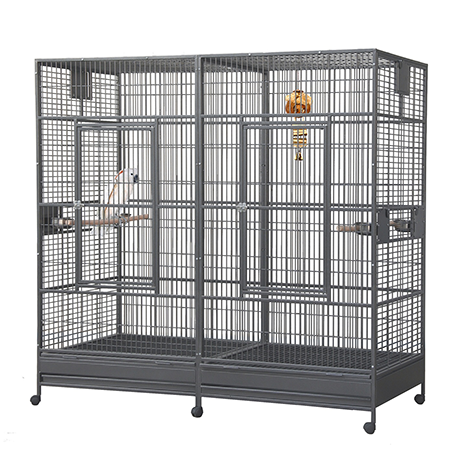
Premium Large Macaw Cage
The Heavy-Duty Aviary Enclosure for Large Macaws is engineered specifically to a...
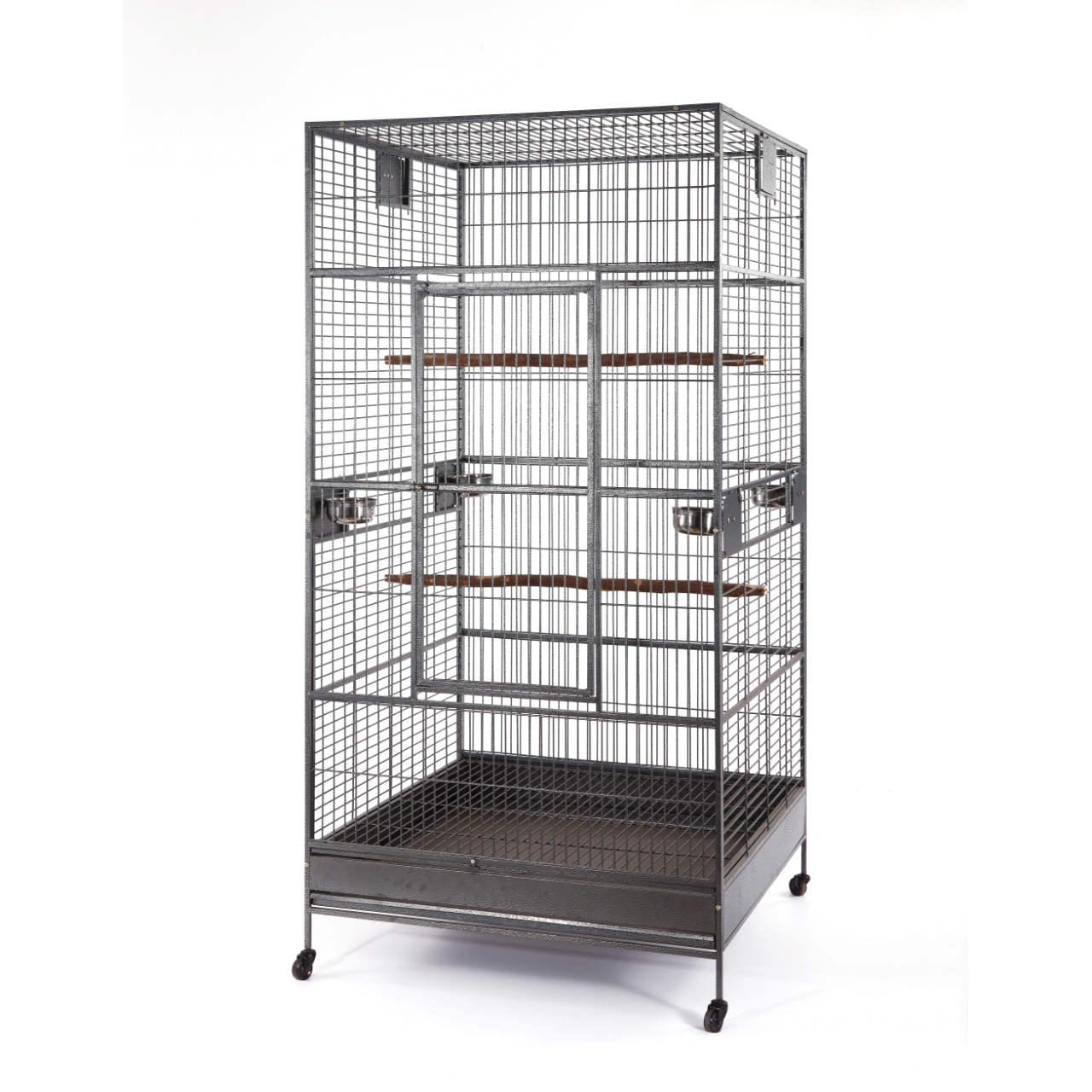
Large Flight Cage
The Extra-Wide Indoor Flight Aviary is engineered for owners who prioritize acti...
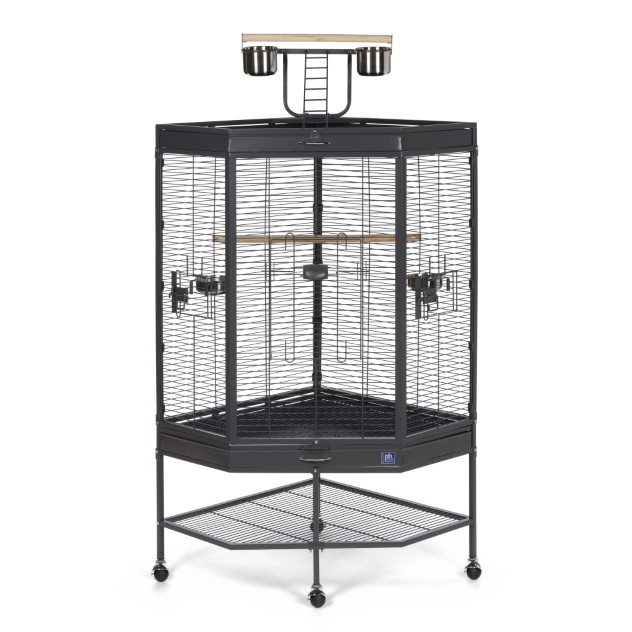
Corner Cage with Playtop
Maximise your living room floor plan without compromising your parrot's living v...
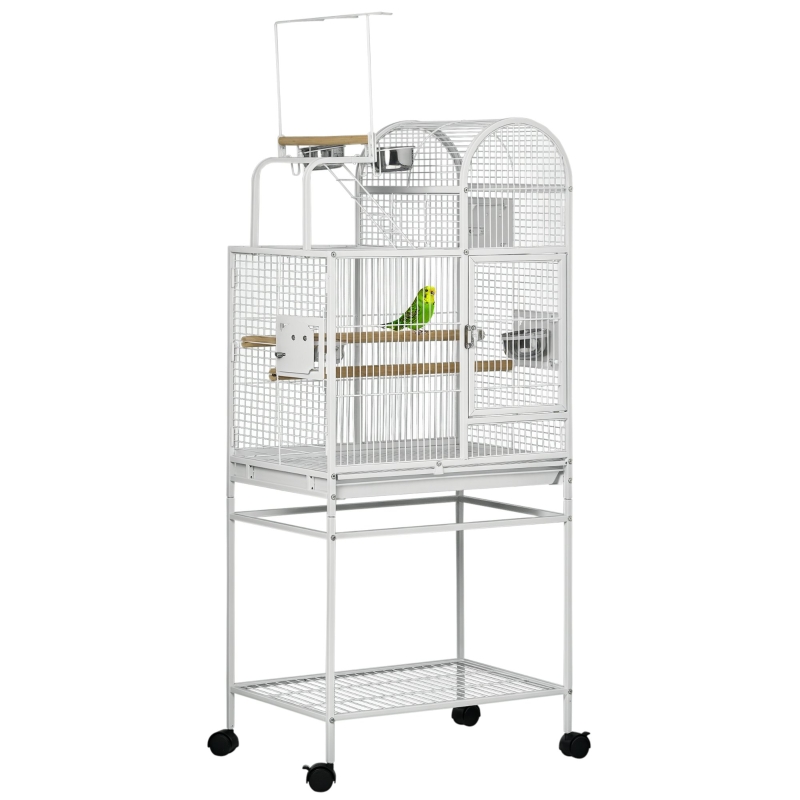
Medium Cockatiel Cage
Designed specifically for the crest clearance, agile flight paths, and climbing ...
Complementary Macaw Supplies & Gear
Macaw Cages: Frequently Asked Questions
For large macaws (Blue-and-Gold, Scarlet, Green-Winged), the absolute minimum interior living dimensions are 120 cm wide by 90 cm deep by 150-160 cm tall (overall exterior height with stand typically exceeding 180 cm). For Hyacinth Macaws, a footprint of at least 150 x 100 x 180 cm or an indoor walk-in aviary is required to accommodate their 100+ cm wingspan.
Bar spacing must measure between 2.5 cm (1.0 inch) and 3.8 cm (1.5 inches). Wire gauge must be a minimum of 5.0 mm to 6.0 mm solid high-tensile steel. Lighter wire gauges (3mm or 4mm) will be bent and snapped at the welds within weeks by a macaw's 500+ psi beak pressure.
Macaws continuously scrape and work cage bars with their beaks. While high-grade powder coatings offer good durability, relentless localized chewing can eventually chip coatings over years. Medical-grade 304/316 stainless steel is impervious to beak forces, completely rustproof, chemically inert (zero zinc or lead), and represents a permanent lifetime enclosure.
A playtop cage integrates an open rooftop gym featuring natural hardwood perches, ladders, and twin stainless feeding dishes, providing a dedicated out-of-cage landing zone without consuming extra floor space. A dome-top cage provides maximum internal headspace and vertical volume, ideal for birds with exceptionally long tail rectrices.
Macaws excel at levering bowls out of standard hoop holders to dump water and feed. Heavy-duty macaw cages feature external swing-out feeding portals secured with spring-loaded deadbolts, locking bowls in place so they cannot be dislodged from inside the cage.
Macaw Species Guides & Enclosure Resources
Macaw species comparison & lifespan · Scarlet Macaw profile · Blue-and-Gold Macaw profile · Hyacinth Macaw requirements · Complete cage and aviary setup guide · Macaw nut and lipid nutrition · All available parrots