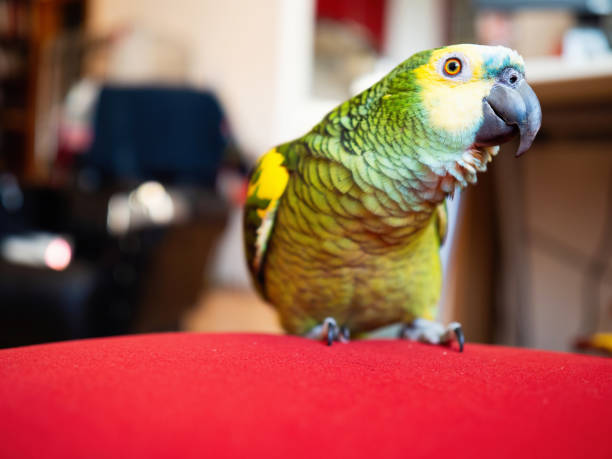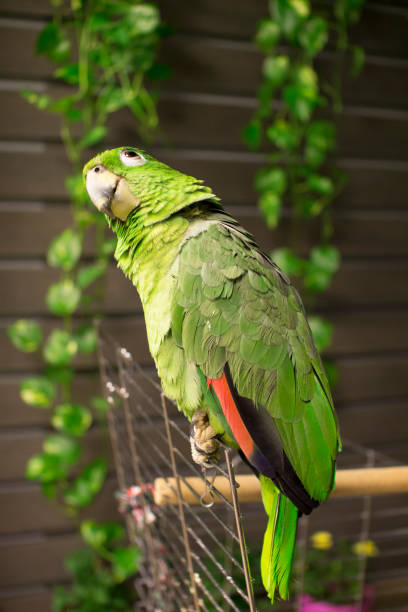
Lilacine Amazon parrot
Species Overview
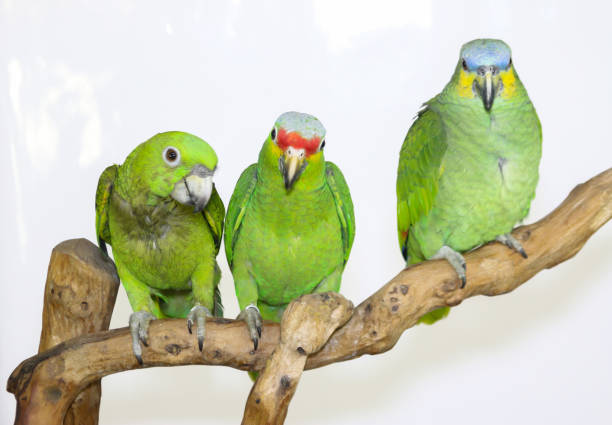
The Lilacine Amazon (Amazon) is an extraordinary companion bird celebrated for its distinctive personality, intelligence, and beauty. Adult specimens reach 32 cm to 34 cm length, 300-360g weight and can live 40 to 50+ years in captivity with proper avicultural care. They require a spacious enclosure measuring at least Minimum 85 cm W x 65 cm D x 110 cm H with 1.9 cm bar spacing, a balanced diet comprising 70% formulated pellets, 25% fresh vegetables, 5% healthy sprouted seeds, and daily social interaction.
Natural Habitat & Wild History of the Lilacine Amazon
In their native wild range, these psittacines inhabit diverse forest canopies and savannah woodlands. They live in active social flocks that forage across wide home ranges daily, displaying complex vocal repertoires and bonded pair relationships.
Physical Dimensions, Morphology & Lifespan
Adult dimensions average 32 cm to 34 cm length, 300-360g weight. In domestic aviculture, their typical lifespan is 40 to 50+ years in captivity when maintained on formulated nutrition with regular exercise and veterinary care.
Temperament, Social Dynamics & Vocal Profile
Vocal and behavioral profile: Moderate noise volume; gentler and calmer than larger amazon species. They thrive on direct human companionship, structured training sessions, and consistent daily schedules.
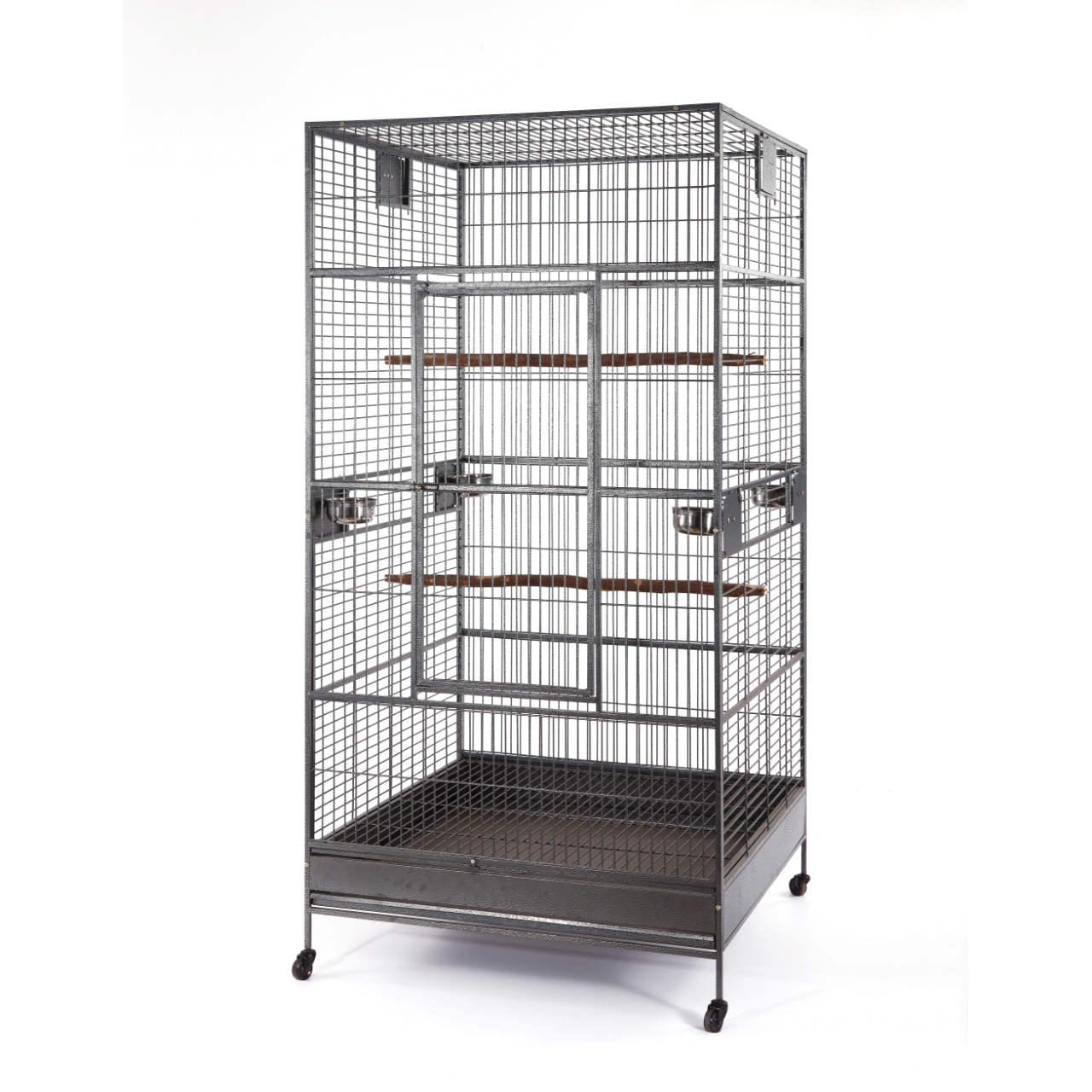
Enclosure Sizing, Safe Metallurgy & Layout
Housing requirements: Minimum 85 cm W x 65 cm D x 110 cm H with 1.9 cm bar spacing. Outfitting the cage with varied-diameter natural hardwood perches (Java wood, Manzanita) and non-toxic food crocks ensures long-term orthopedic foot health and escape security.
Dietary Requirements, Nutrition & Toxic Food Precautions
Recommended daily intake: 70% formulated pellets, 25% fresh vegetables, 5% healthy sprouted seeds. Never feed toxic substances including avocado, chocolate, caffeine, alcohol, fruit pits containing cyanide, or high-salt human foods.
Common Health Susceptibilities & Warning Signs
Watch for early signs of illness: fluffed feathers, lethargy, changes in dropping consistency, discharge from nares, or tail bobbing. Maintain annual wellness exams with an avian veterinarian.
Daily Enrichment, Foraging & Out-of-Cage Flight
Provide at least 2 to 3 hours of supervised daily out-of-cage flight and exploration. Rotate destructible wood toys, palm shredders, and puzzle foraging feeders every two weeks to prevent captive boredom.
Social Bonding, Training & Lifelong Companionship
Establishing a secure, trusting bond with an exotic parrot requires patient positive reinforcement training, respect for avian body language, and a calm, predictable daily routine. Never use physical punishment or aggressive handling, which permanently damages trust. Spend dedicated daily one-on-one time engaged in target training, gentle vocalisation, and shared foraging activities to build a joyful, well-adjusted relationship spanning decades.
Training & Enrichment
Lilacine Amazons take to positive reinforcement readily and tend to be less reactive than other Amazons, which makes them good candidates for cooperative-care training such as voluntary scale-stepping, foot presentation and towel acceptance. Keep sessions short. The usual Amazon rules still apply: head and neck petting only, and read the escalation signals rather than pushing through them.
Health Considerations
As with the rest of the genus, obesity and hepatic lipidosis on seed-based diets are the leading preventable risks, alongside hypovitaminosis A. Aspergillosis follows poor ventilation and damp bedding. Because the species is uncommon in captivity, identify an avian veterinarian with psittacine experience before you acquire a bird rather than after. Weigh weekly on a gram scale, book an annual examination with periodic bloodwork, and quarantine new arrivals for 30-45 days in a separate airspace with screening for PBFD, avian bornavirus and Chlamydia psittaci.
Frequently Asked Questions
With high-grade formulated nutrition and proper care, they typically live 40 to 50+ years in captivity.
We recommend a minimum enclosure size of Minimum 85 cm W x 65 cm D x 110 cm H with 1.9 cm bar spacing with safe, non-toxic bar spacing.
Daily nutrition should follow 70% formulated pellets, 25% fresh vegetables, 5% healthy sprouted seeds alongside clean fresh drinking water.
They make wonderful companions for dedicated owners willing to invest time into daily social interaction, out-of-cage exercise, and positive reinforcement.
A minimum of 2 to 3 hours of active, supervised out-of-cage flight and social engagement is recommended daily.