Avian First-Aid Kit
Product Overview & Description
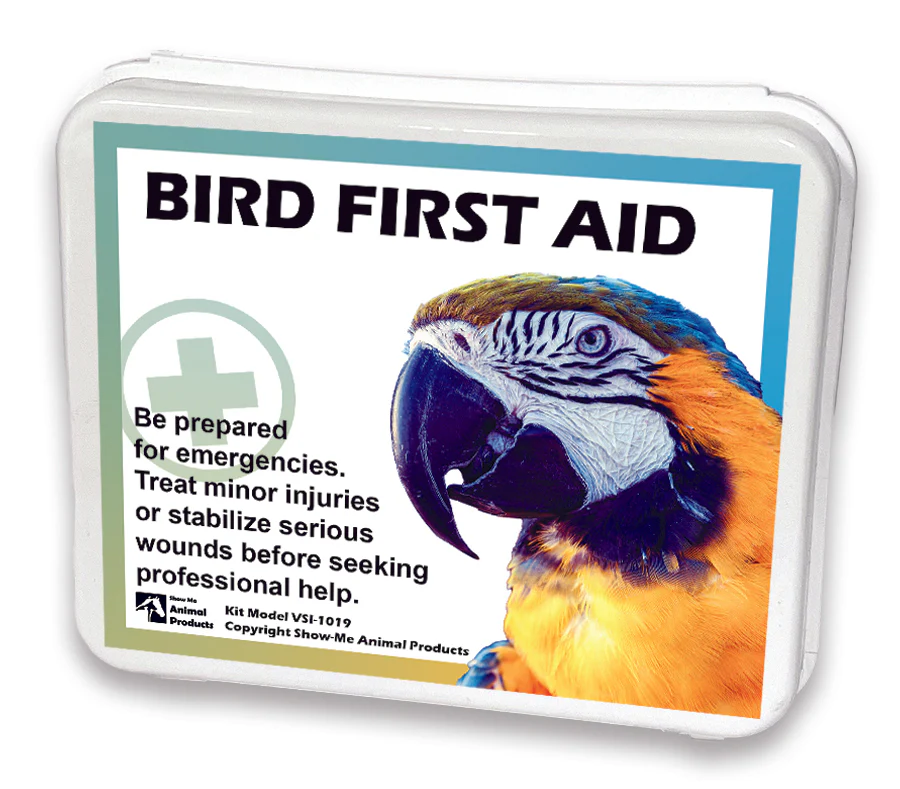
The Complete 18-Piece Avian Emergency First Aid Kit is an essential safety requirement for every bird owner, breeder, and aviary manager. This kit contains specialized instruments and sterile supplies required to stabilize broken blood feathers, minor lacerations, bite wounds, and acute trauma before emergency clinical transport. Housed in a waterproof, impact-resistant carrying case with an emergency triage manual.
Technical Specifications & Materials
The Critical Blood Feather Emergency Protocol
Growing 'blood feathers' have an active central arterial supply. If broken during flight or night frights, a bird can bleed to death rapidly due to their small total blood volume. First apply styptic powder or cornstarch with firm, gentle pressure to the broken feather shaft (never to the skin) and keep the bird calm and warm. If bleeding does not stop within a few minutes or starts again, contact an avian vet immediately: removing a broken blood feather is best done by a vet or with a vet's guidance, because pulling it incorrectly, especially a large wing or tail feather, can damage the follicle or bone. After any removal, apply gentle pressure with sterile gauze; do not pack styptic powder into the empty follicle.
Cohesive Non-Adhesive Bandaging (Vetrap)
Standard adhesive bandages pull out feathers and tear paper-thin avian skin. Our kit utilizes medical-grade self-cohesive bandaging that sticks firmly to itself without sticking to plumage, for temporary dressings. Never wrap the body or chest tightly, because birds must be able to move the keel to breathe; leave wing-wrapping to an avian vet where possible.
Sterile Irrigation & Eye Rinse
Single-use sterile saline pods allow gentle flushing of eye debris, foreign particles, or minor puncture wounds without introducing tap water contaminants.
Thermal Shock Management Blanket
Injured birds enter hypothermic shock within minutes as blood pressure drops. The included reflective thermal emergency blanket preserves radiant body heat during transport to an avian clinic.
Questions buyers ask about this item
Only as a last resort, ideally with an avian vet advising you by phone. First apply styptic powder or cornstarch and gentle pressure to the broken shaft (never to the skin). If bleeding continues, contact an avian vet immediately; pulling a blood feather incorrectly, especially a large flight feather, can damage the follicle or bone.
Inspect the kit every 6 months to ensure saline pods are sealed and replace any consumable items used during emergencies.
Yes, the compact waterproof hard-shell case fits easily in a glove compartment or bird travel bag.
Related reading & species guides
All Health & Wellness · Pet bird supplies hub · Parrot care equipment · Macaw cage guide · Cage & aviary setup guide · Parrot nutrition guide · Safe woods & household hazards · Recognising illness in parrots · Available parrots