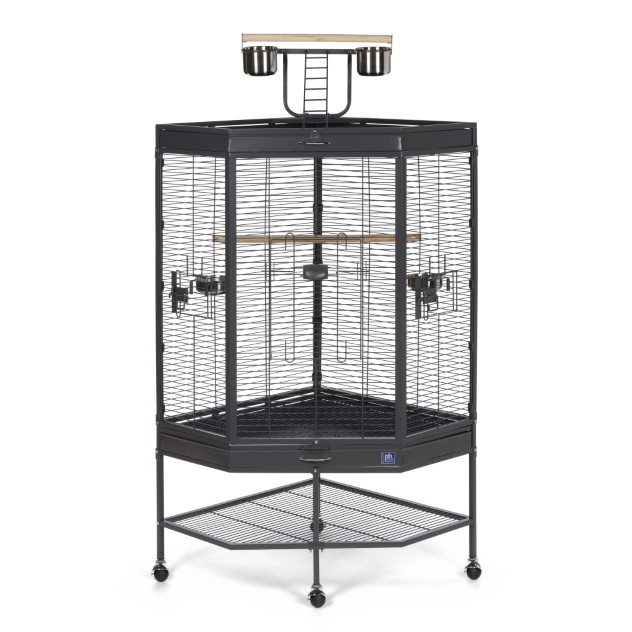
Corner Cage with Playtop
Space-saving corner design maximizes your room while giving your bird generous l...
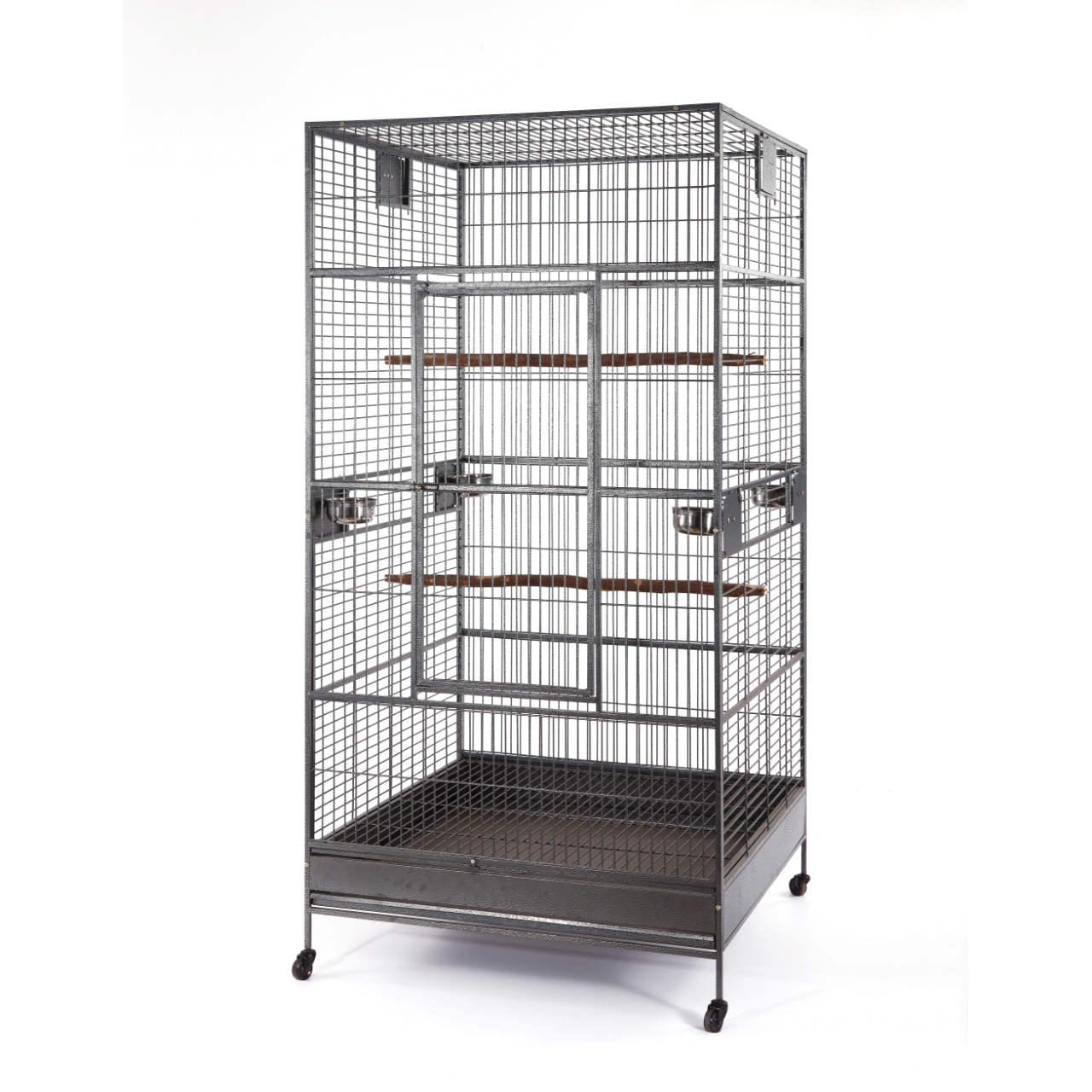
Large Flight Cage
Spacious 160cm tall flight cage with ample room for your parrot to spread its wi...
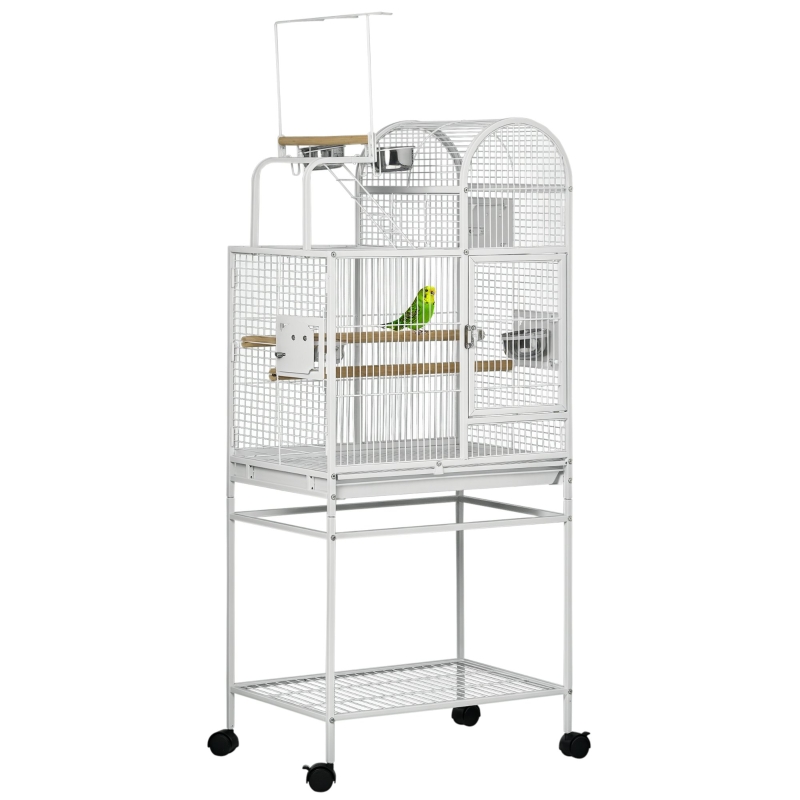
Medium Cockatiel Cage
Elegant cage ideal for cockatiels....
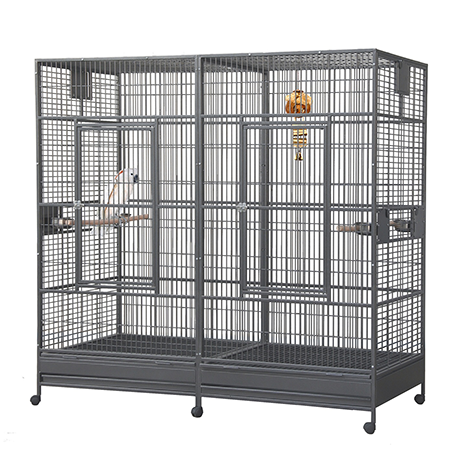
Premium Large Macaw Cage
Spacious wrought-iron cage for macaws....
Minimum internal dimensions by size class
The working rule is that a bird must be able to turn around fully with wings extended, and flap without primaries or tail striking the bars. Manufacturer descriptions are frequently optimistic, so measure the internal usable space, not the external footprint including the seed skirt and stand.
- Cockatiel, budgerigar, small parakeet: from 61 x 46 x 61 cm (24 x 18 x 24 in), bar spacing 1.3-1.6 cm.
- Conure, caique, Indian Ringneck, Quaker: from 61 x 61 x 91 cm (24 x 24 x 36 in), bar spacing 1.6-1.9 cm.
- African Grey, Amazon, Eclectus, Goffin's and Major Mitchell's Cockatoo: from 91 x 61 x 122 cm (36 x 24 x 48 in), bar spacing 1.9-2.5 cm.
- Blue-and-Gold and Scarlet Macaw: from 122 x 91 x 152 cm (48 x 36 x 60 in), bar spacing 2.5-3.8 cm.
- Hyacinth Macaw: from 152 x 91 x 183 cm (60 x 36 x 72 in); a walk-in flight is strongly preferred.
Bar spacing is a safety specification
Bars set too far apart allow a bird to push its head through and become trapped, which causes strangulation and neck injury. Bars set too close prevent climbing and can trap toes. Match the spacing to the species, not to the cage's marketing category - a cage sold as "large parrot" may carry macaw-width bars that a Grey can put its head through.
Horizontal bars on at least two sides matter for climbing species such as macaws, cockatoos and Greys. Vertical-only bars turn the whole enclosure into a smooth wall the bird cannot use.
Metals: the part that quietly kills birds
Zinc and lead toxicosis are among the most common avoidable poisonings in companion parrots. Galvanised wire is zinc-coated, and a bird that chews it - which every parrot will - ingests zinc directly. Symptoms include vomiting, increased thirst and urination, weakness and neurological signs, and the condition is frequently fatal without chelation therapy.
Safe choices are 304 or 316 stainless steel, which is inert and lifetime-durable, or a good-quality powder-coated wrought iron where the coating is thick, intact and non-toxic. Inspect powder coating regularly; once a large parrot has chipped through to bare metal, the cage needs repair or replacement. Avoid unbranded imported cages with unknown coatings, decorative brass fittings and lead-weighted bases.
Placement, and the rest of the setup
- Position one side against a wall. A cage in the middle of a room offers no refuge and raises baseline stress.
- Keep the cage out of the kitchen. Overheated PTFE-coated cookware releases fumes that kill birds within minutes; so do self-cleaning oven cycles, some space heaters and certain hair appliances.
- Avoid direct draughts, direct all-day sun, and the top of a fridge or a radiator.
- Fit perches of varying natural diameters at different heights, with the highest perch not so high that the bird's head touches the roof.
- Use bolt-type or padlocked latches for cockatoos and macaws. Spring clips are opened by a determined bird in days.
Cages in this range
Corner Cage with Playtop · Large Flight Cage · Medium Cockatiel Cage · Premium Large Macaw Cage
Related reading
Parrot nutrition guide · Cage and aviary setup · Safe plants and toxic foods · Recognising illness in parrots · Bathing and grooming · Compare parrot species
Cages: frequently asked questions
Large enough that the bird can turn fully with wings extended and flap without striking the bars. As practical minimums: 61 x 46 x 61 cm for a cockatiel, 91 x 61 x 122 cm for an African Grey or Amazon, and 122 x 91 x 152 cm for a large macaw. Bigger is always better and no cage substitutes for daily out-of-cage time.
Roughly 1.3-1.6 cm for cockatiels and budgerigars, 1.6-1.9 cm for conures and caiques, 1.9-2.5 cm for Greys, Amazons and Eclectus, and 2.5-3.8 cm for macaws. Spacing that is too wide lets a bird trap its head; too narrow traps toes.
No. Galvanised wire is zinc-coated and chewing birds ingest zinc, which causes a serious and sometimes fatal toxicosis. Choose 304 or 316 stainless steel, or a heavy powder-coated wrought iron cage with intact coating.
Round cages give a bird no corner to retreat to and no straight run for movement, and tapered tops trap tails and toes. A rectangular cage of the same volume is a better enclosure in every practical respect.
In a room the family uses, with one side against a wall, away from draughts, direct all-day sun, and above all away from the kitchen - fumes from overheated non-stick cookware are rapidly fatal to birds.
Yes. No cage of any size provides the flight distance, novelty or social contact a parrot needs. Treat the cage as a safe base, not as the bird's world.