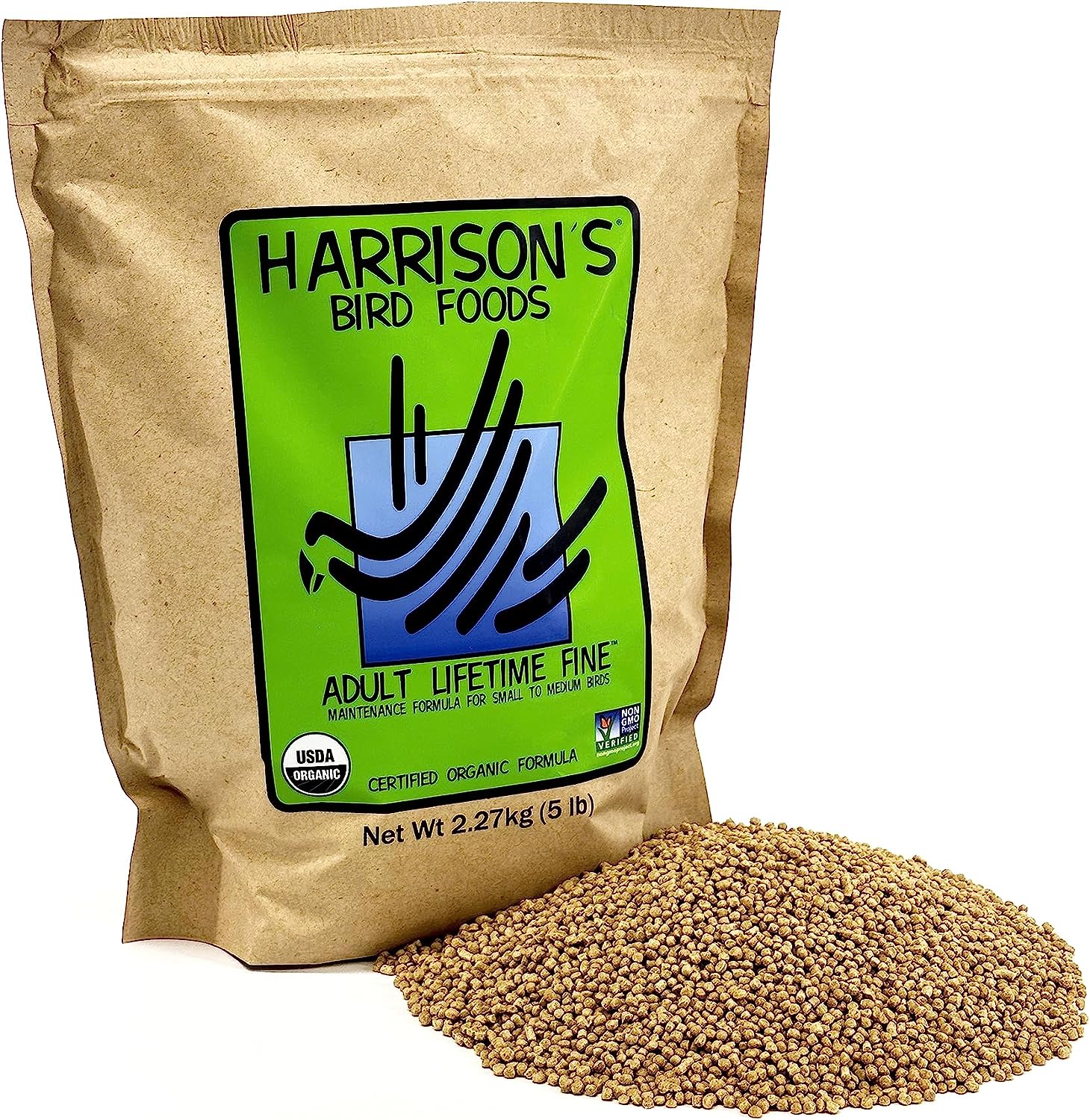
Harrison's Adult Lifetime Fine
Harrison's Bird Foods Adult Lifetime Fine is a certified organic, non-GMO pellet...
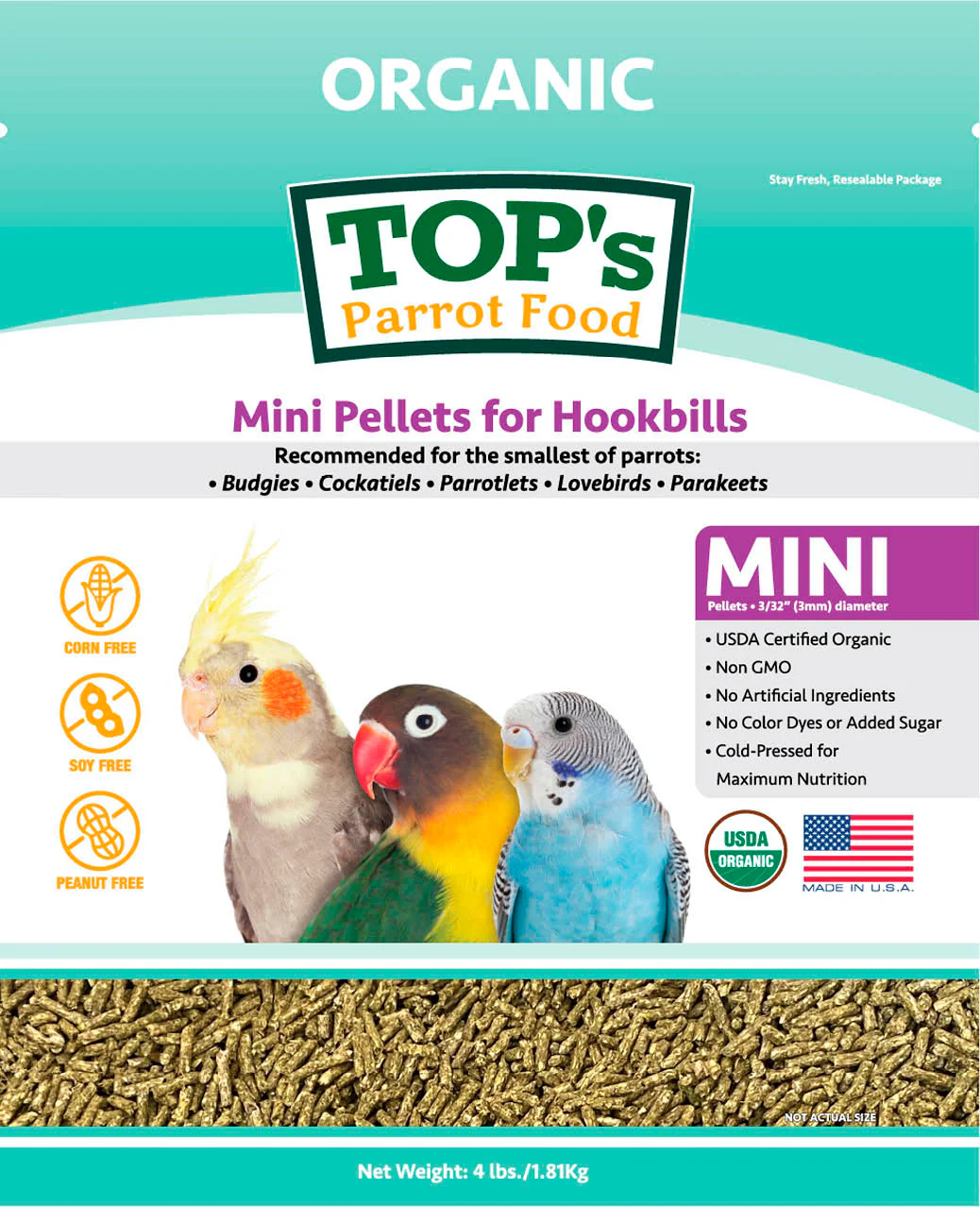
Organic Parrot Pellets
USDA organic certified pellets....
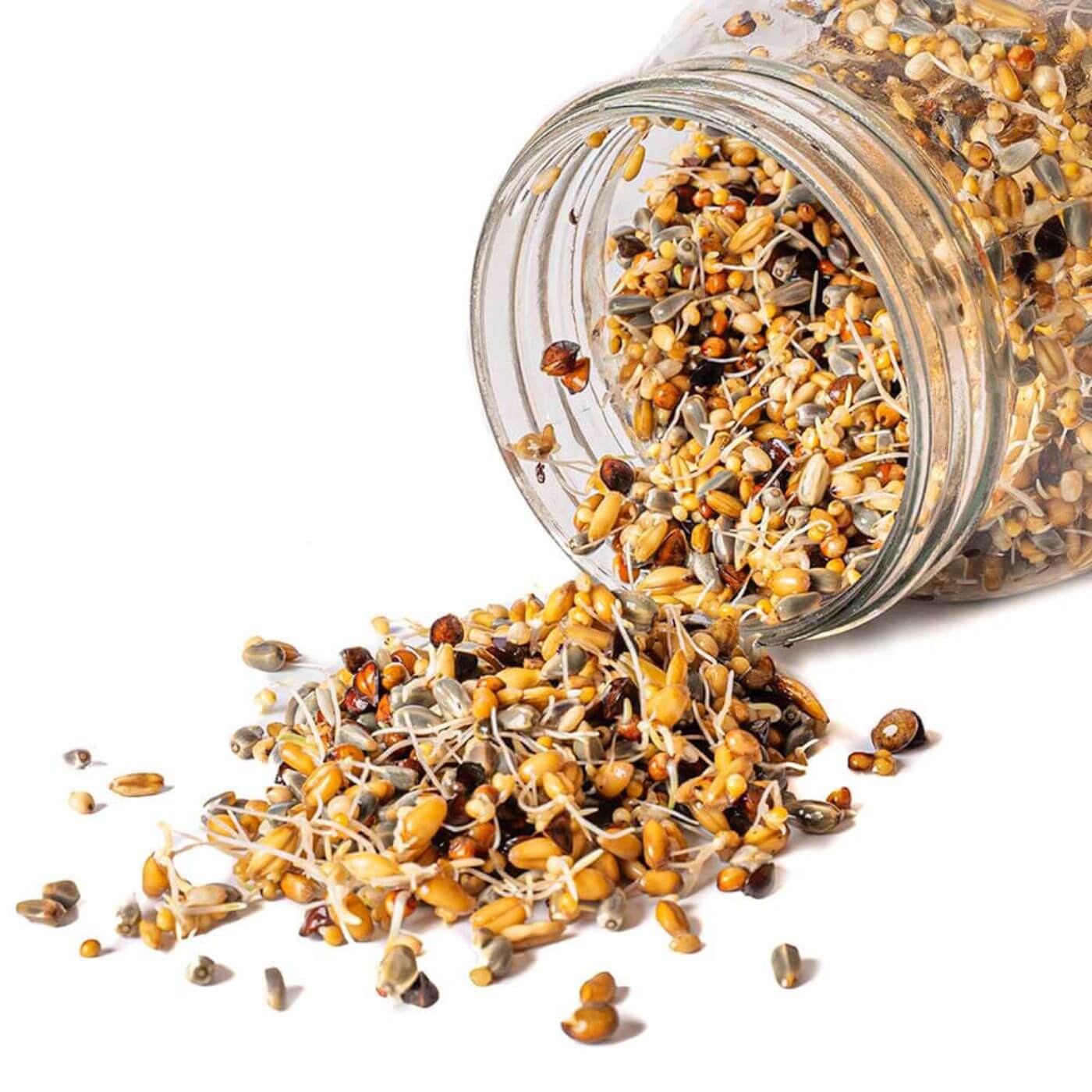
Sprouting Seed Mix
Organic sprouting seed blend with mung beans, lentils, quinoa, sunflower seeds, ...
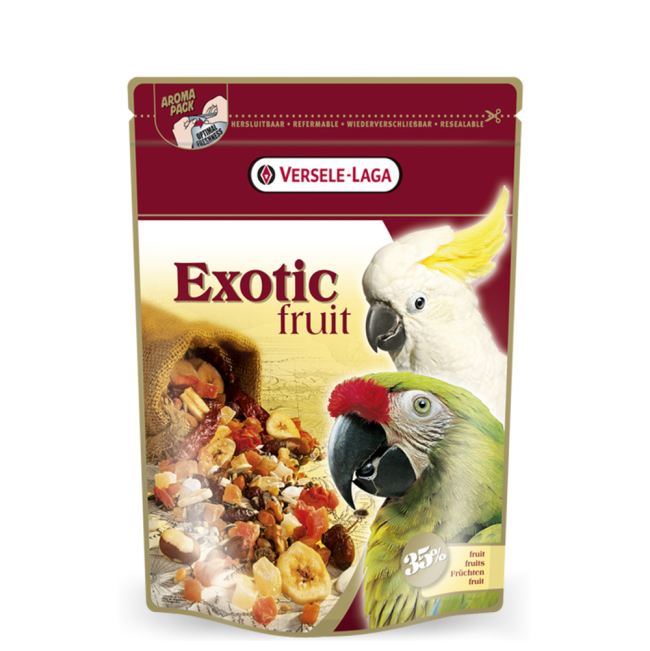
Tropical Fruit Seed Mix
Premium blend with dried tropical fruits....
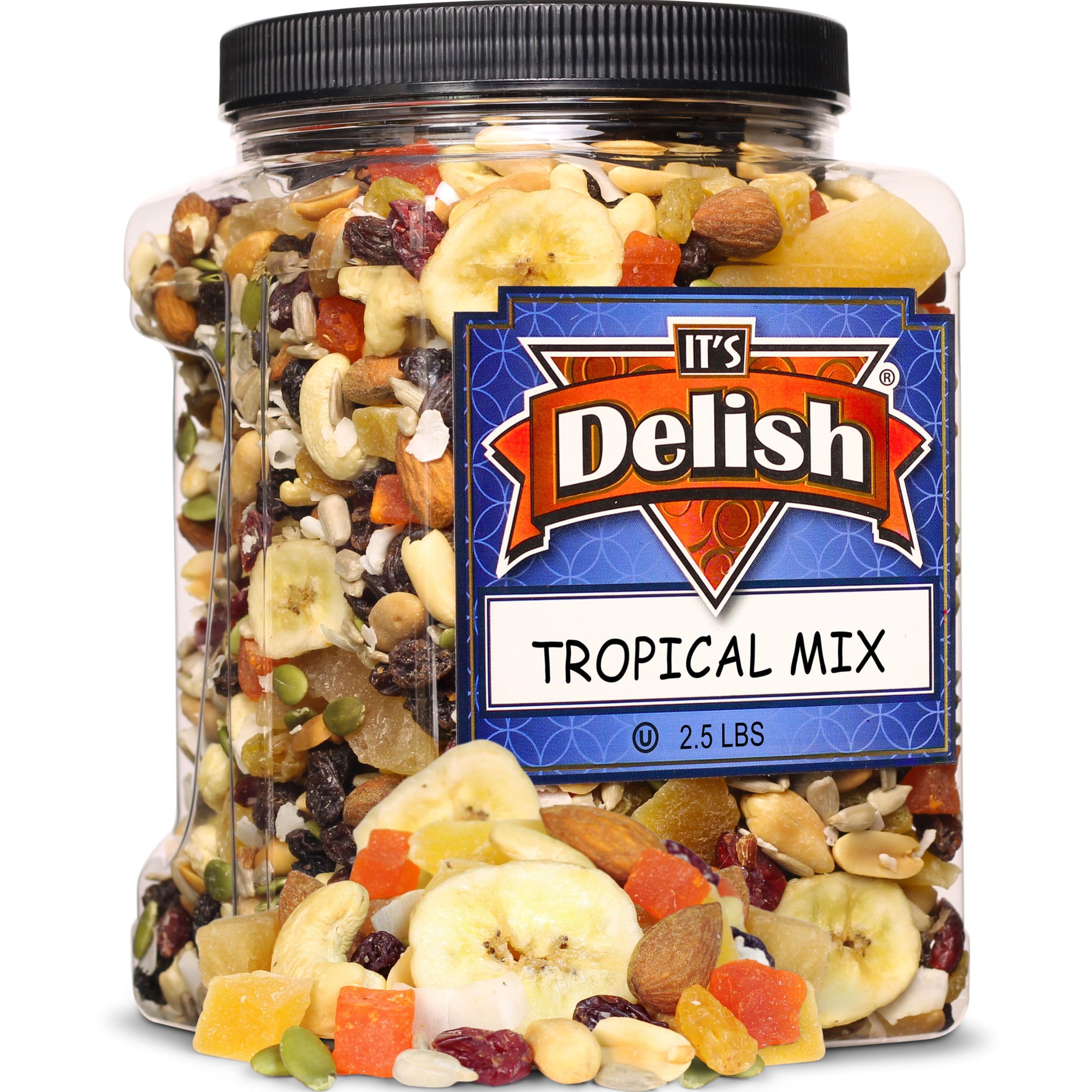
Tropical Nut & Fruit Mix
A premium hand-packed blend of macadamia nuts, walnuts, almonds, dried mango, pa...
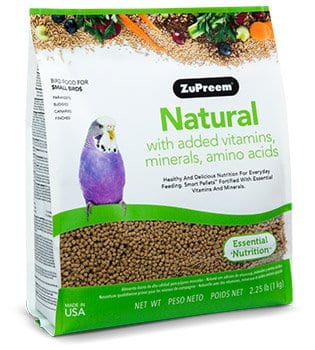
ZuPreem Natural Bird Food
ZuPreem Natural with Added Vitamins and Minerals provides essential nutrition in...
What a good ration looks like
For most parrot species the working target is roughly 60-70 per cent good-quality formulated pellet by volume, 20-30 per cent fresh vegetables with a smaller share of fruit, and a small measured allowance of nuts and seed used as training rewards rather than as a base.
There are two important exceptions. Hyacinth Macaws genuinely require a high-fat, palm-nut-led diet, because that is what they evolved on in the Pantanal. Eclectus parrots need the reverse: a large volume of fresh, fibrous plant matter with a low-fortification pellet as a smaller component, because they are unusually sensitive to excess synthetic vitamins. Species detail matters more than any general rule.
Converting a seed-addicted bird
Birds recognise food by sight and texture, and a parrot raised on seed may not recognise a pellet as edible at all. Never starve a bird onto pellets - a parrot can go into negative energy balance within 48 hours and hepatic lipidosis follows quickly.
- Weigh the bird daily on a gram scale throughout the conversion. A drop of more than 5 per cent of body weight means stop and reassess.
- Mix pellets into the seed at a low ratio and increase it over several weeks.
- Offer pellets in the morning when appetite is highest, and seed later in the day.
- Let the bird see you or another bird eating the new food. Social facilitation works.
- Try warming, moistening or crumbling pellets over a favourite vegetable to change the texture cue.
Foods that are genuinely toxic to parrots
- Avocado - contains persin; implicated in acute cardiac failure and death in birds. No safe quantity.
- Chocolate and cocoa - theobromine and caffeine; causes vomiting, seizures and death.
- Caffeine in any form - coffee, tea, energy drinks.
- Alcohol - birds have no meaningful tolerance.
- Onion and garlic in quantity - implicated in haemolytic anaemia.
- Apple pips, cherry, peach, apricot and plum stones - contain cyanogenic glycosides. The flesh is fine; remove the pit or core.
- Salt, and heavily salted human snacks - birds are small and the sodium load is disproportionate.
- Xylitol - a sugar substitute in gums and baked goods with no established safe dose for birds.
- Dried or mouldy nuts - a source of aflatoxin, which causes liver damage. Buy human-grade, store cool and dry, discard anything discoloured.
Fresh food that earns its place
Prioritise vegetables rich in beta-carotene, the vitamin A precursor that seed diets lack: sweet potato, carrot, butternut squash, red pepper, kale, broccoli, spring greens and dandelion. Sprouted pulses and seeds add live enzymes, protein and moisture and are especially valuable for rosellas, cockatiels and Eclectus. Keep fruit modest for species prone to obesity - Amazons in particular - and treat it as a training reward rather than a staple.
Wash all produce, remove uneaten fresh food within a few hours in warm weather to prevent bacterial growth, and never feed anything mouldy.
Food & Pellets in this range
Harrison's Adult Lifetime Fine · Organic Parrot Pellets · Sprouting Seed Mix · Tropical Fruit Seed Mix · Tropical Nut & Fruit Mix · ZuPreem Natural Bird Food
Related reading
Parrot nutrition guide · Cage and aviary setup · Safe plants and toxic foods · Recognising illness in parrots · Bathing and grooming · Compare parrot species
Food & Pellets: frequently asked questions
Pellets should form the base for most species - roughly 60-70 per cent of intake - with fresh vegetables making up most of the remainder and seed reserved for training rewards. All-seed diets cause obesity, fatty liver disease and vitamin A deficiency.
Gradually, over weeks, while weighing the bird daily on a gram scale. Mix pellets into the seed at an increasing ratio, offer pellets when appetite is highest in the morning, and stop and reassess if the bird loses more than 5 per cent of body weight. Never withhold food to force conversion.
Avocado, chocolate and cocoa, caffeine, alcohol, xylitol, large amounts of onion or garlic, salt, and the pits and pips of apples, cherries, peaches, apricots and plums, which contain cyanogenic compounds. Mouldy food of any kind is also dangerous because of aflatoxin.
It varies by species, activity and body condition, so track body weight rather than portion size. Weigh weekly on a gram scale and adjust to hold a stable, healthy weight; your avian vet can set a target for your individual bird.
Plain cooked wholegrains, pulses, and most fresh vegetables and fruit are fine. Anything salted, sugared, fried, chocolate-based or containing avocado, alcohol or caffeine is not. Feed from a separate plate rather than your mouth, as human oral bacteria can be harmful to birds.
Yes. Eclectus need a large volume of fresh, fibrous plant matter with a low-fortification pellet as a smaller component. Stacking a heavily fortified pellet with extra supplements is associated with toe-tapping and wing-flipping in this species.