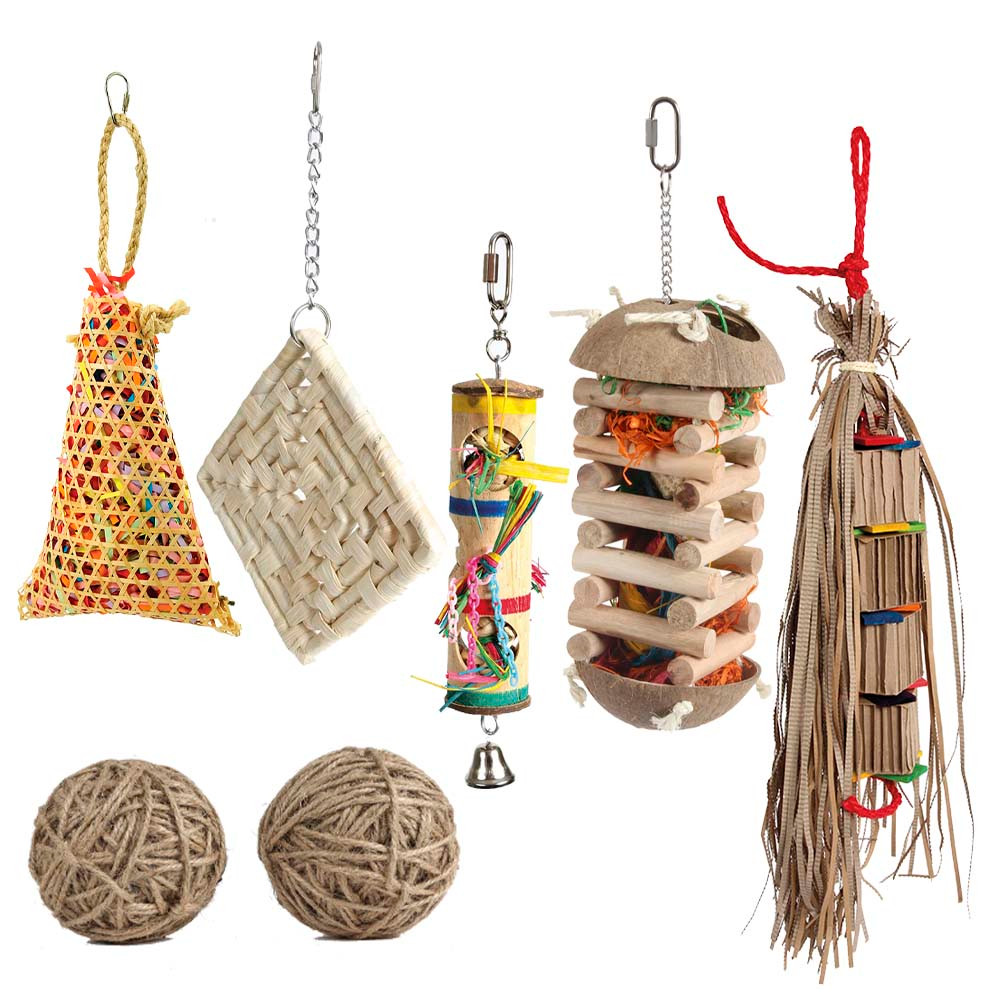
Foraging Toy Bundle
Set of 5 natural foraging toys....
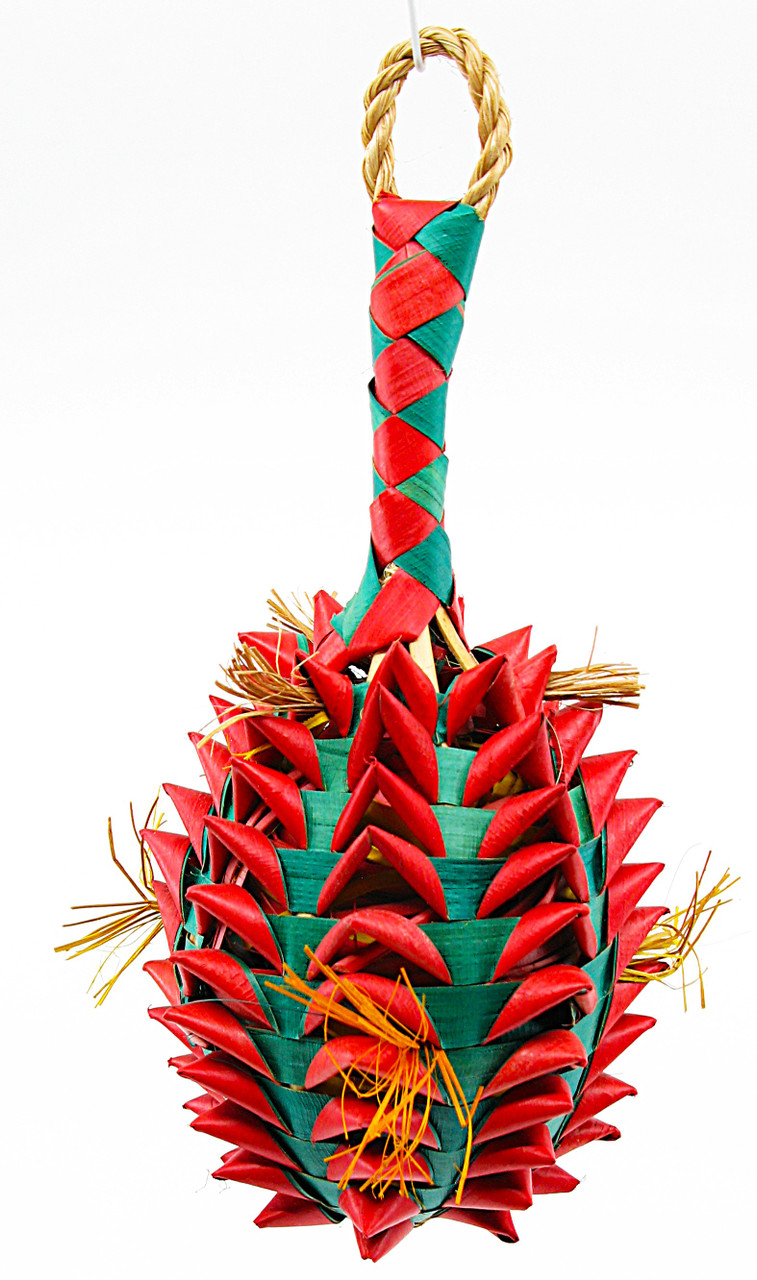
Planet Pleasures Pineapple Foraging Toy
Handmade from 100% natural, sustainable palm leaf, this pineapple-shaped foragin...
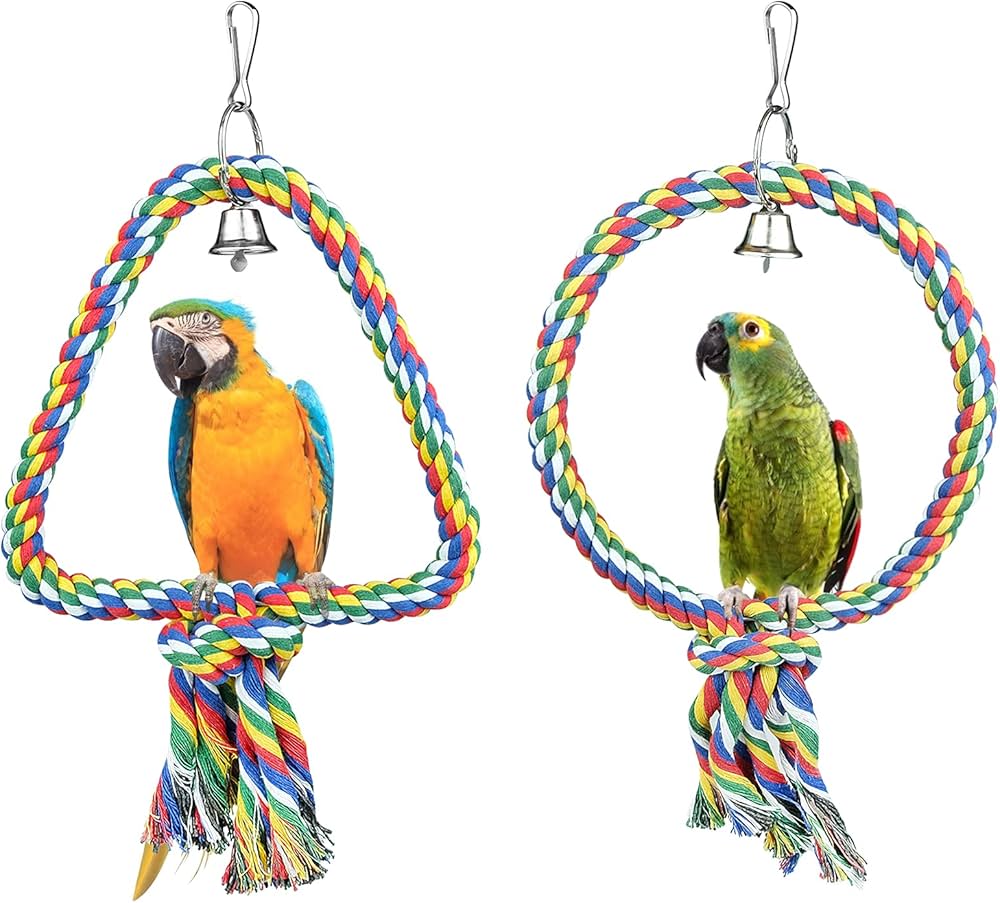
Rope & Swing Bundle
Colorful cotton rope perches and swings....
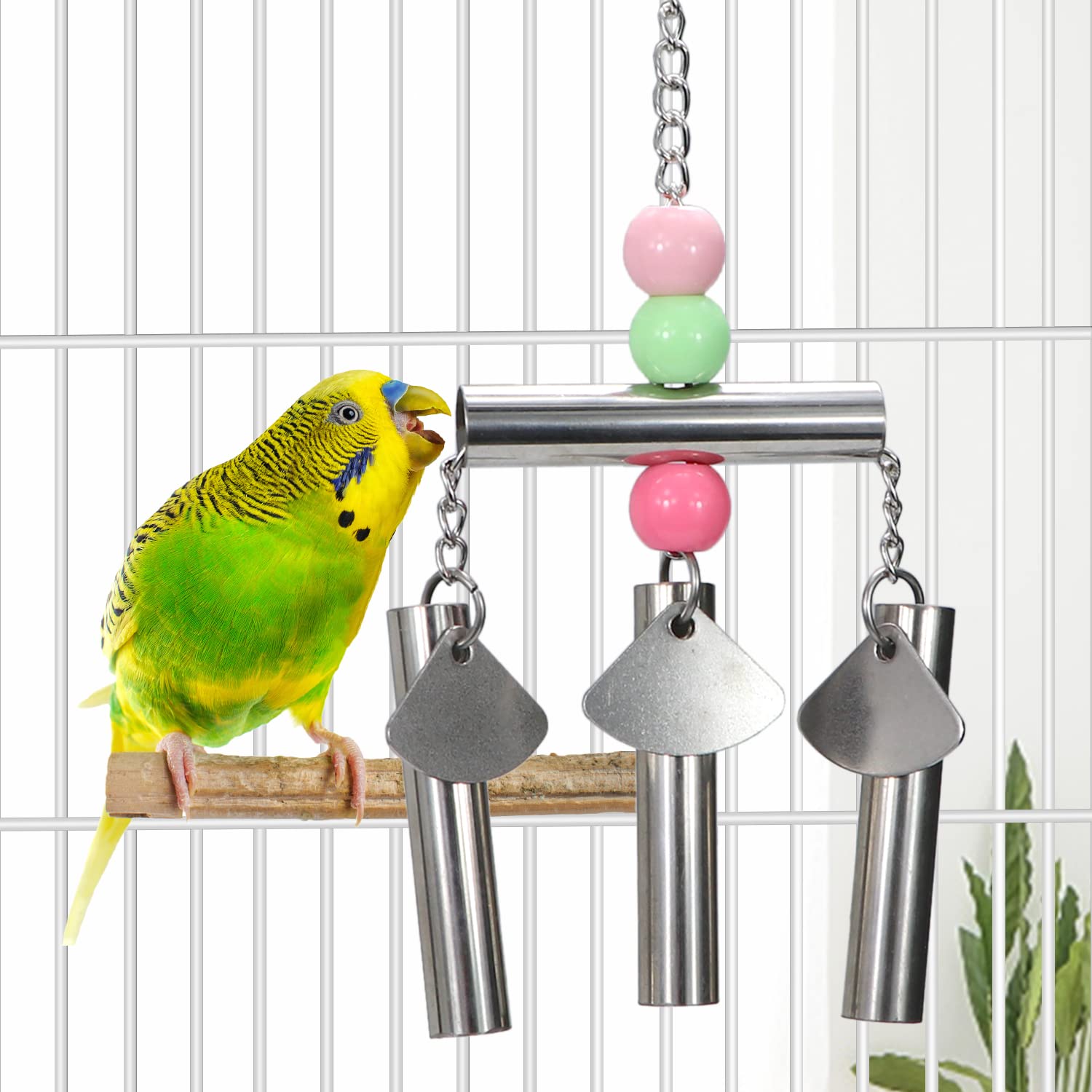
Stainless Steel Bell Cluster
Three graduated stainless steel bells on a quick-link chain. Produces bright, cl...
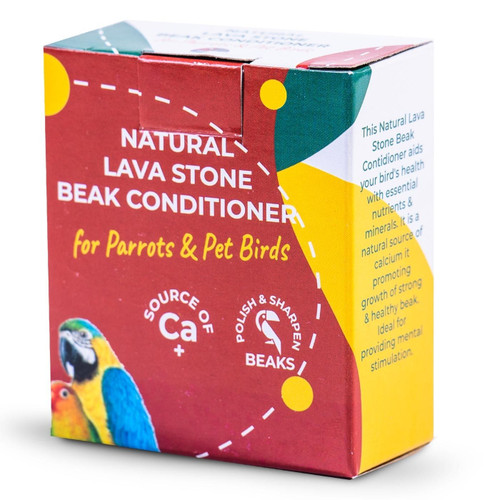
Wooden Block Beak Conditioner
Chunky hardwood blocks strung on stainless steel chain with colorful wooden bead...
Foraging first, everything else second
The highest-value change most owners can make is to stop serving food in an open bowl. Deliver a meaningful share of the daily ration - a third to a half is a sensible target - through work: wrapped in paper, buried in shredded material, hidden in cardboard tubes, threaded onto skewers, or inside puzzle feeders of graded difficulty.
Start easy. A bird that has never foraged will not investigate a sealed puzzle box; begin with food visible under a single sheet of paper and increase difficulty only as the bird succeeds. Foraging enrichment loaded before you leave the house is also the most effective single measure against separation screaming.
The four categories worth stocking
- Destructible - untreated softwood, palm leaf, yucca, vine, cardboard, loofah and plain paper. These are consumables and should be replaced continuously. Chewing is a need, not a vice.
- Foraging - puzzle feeders, treat balls, wrapped parcels and skewers, at a difficulty the bird can actually solve.
- Manipulative - beads, chains, blocks, bells and hanging assemblies that reward handling and beak work.
- Comfort and movement - swings, boings, ladders and platforms of varying diameter that provide exercise and postural variety.
Rotation beats quantity
A cage crammed with permanent toys stops being interesting within a fortnight and leaves the bird no clear space to move. Keep three or four items in the cage at a time and rotate weekly from a larger stored pool. Novelty is the active ingredient, and a rotated old toy is nearly as effective as a new one.
Some birds - African Greys in particular - are neophobic and will avoid a new object placed directly in the cage. Introduce it outside the cage first, on a table where the bird can watch it from a distance, then move it closer over several days.
Hazards to check for on every toy
- Frayed cotton or sisal rope - long loose fibres wrap around toes and can amputate them, and ingested strands cause crop and gut impaction. Trim fraying immediately or remove the toy.
- Zinc-plated or galvanised chain, clips and quick links - a chewing bird ingests zinc directly. Use stainless steel hardware.
- Bell clappers and small jingle bells - toes and beaks become trapped in the slot. Use bells with an enclosed or oversized clapper.
- Keyring-style split rings - a classic cause of trapped and degloved toes. Replace with stainless quick links or C-clamps.
- Small detachable parts on toys for large parrots - anything a macaw can crack off is a swallowing hazard.
- Mirrors for lone birds - frequently drive regurgitation, territorial behaviour and reproductive frustration in a bird with no real partner.
Toys & Enrichment in this range
Foraging Toy Bundle · Planet Pleasures Pineapple Foraging Toy · Rope & Swing Bundle · Stainless Steel Bell Cluster · Wooden Block Beak Conditioner
Related reading
Parrot nutrition guide · Cage and aviary setup · Safe plants and toxic foods · Recognising illness in parrots · Bathing and grooming · Compare parrot species
Toys & Enrichment: frequently asked questions
Three or four in the cage at a time, rotated weekly from a larger stored pool, plus destructible chew items replaced continuously. Rotation matters more than quantity - novelty is the active ingredient.
It means making the bird work for its food rather than eating from an open bowl - wrapped parcels, puzzle feeders, hidden portions. Wild parrots spend most of their waking hours foraging, and replacing that lost activity is the most effective single measure against screaming and feather plucking.
Only while intact. Frayed cotton and sisal wrap around toes and can cause amputation, and swallowed strands cause crop impaction. Inspect weekly, trim fraying at once, and discard a toy that keeps unravelling.
Generally no. A lone bird often treats its reflection as a mate, which drives regurgitation, territorial aggression and reproductive frustration. Foraging and destructible toys are far better company substitutes.
Probably not. Destroying wood, palm and cardboard is exactly what a parrot should be doing, and those items are consumables. Budget for continuous replacement, especially for macaws and cockatoos.
Stainless steel quick links and C-clamps. Avoid galvanised or zinc-plated chain and clips, which cause zinc toxicosis when chewed, and avoid keyring split rings, which trap toes.