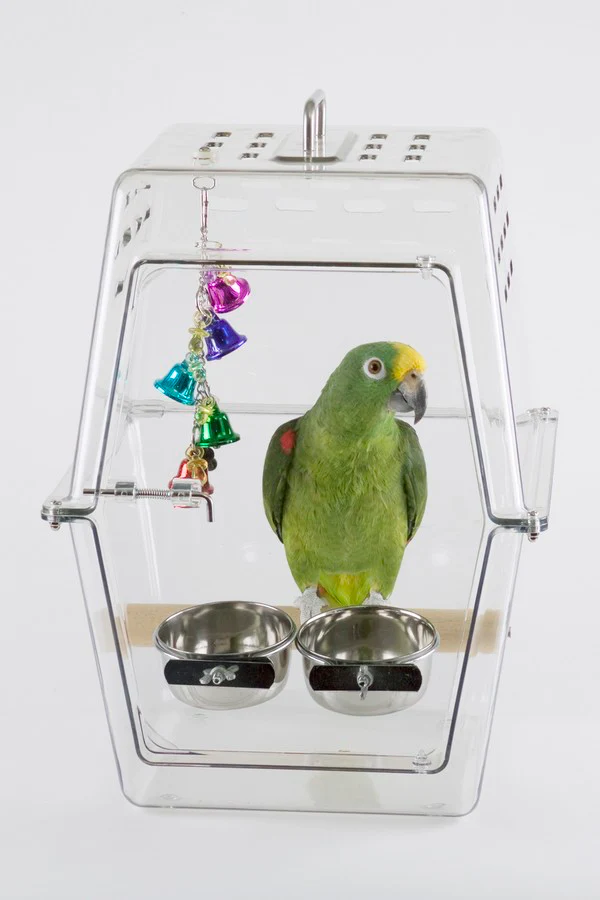
Acrylic Clear-View Carrier
Crystal-clear acrylic travel carrier that gives your parrot full visibility duri...
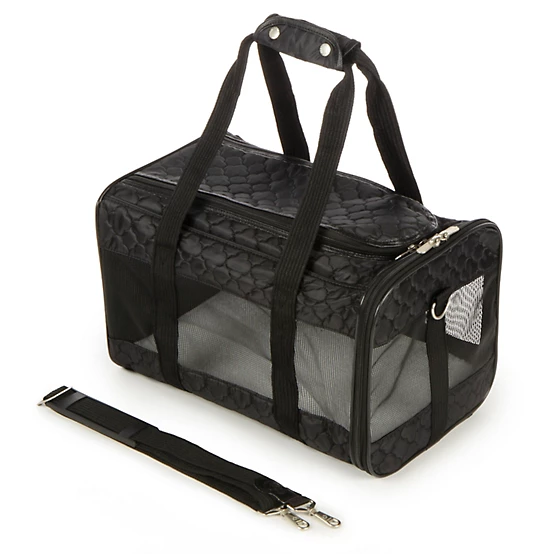
Deluxe Travel Carrier
Airline-approved travel carrier....
What a good carrier has
- A secure, low perch fixed rigidly across the carrier, sized to the bird's foot. A loose perch is worse than no perch.
- Enough height to stand and turn comfortably, but deliberately not enough room for full flight - a bird thrown around a large box is at more risk than one in a snug one.
- Ventilation on more than one side, so airflow continues if one face is against a car seat.
- A door that latches positively and cannot be worked open from inside. Cockatoos and macaws defeat simple catches.
- A solid, non-slip floor. Grid floors trap toes during braking and cornering.
- A removable liner or tray so it can be cleaned properly between journeys.
Setting up and travelling
Leave the carrier out as furniture for weeks before you need it, with the door open and treats inside, so the bird enters voluntarily. A bird that has been chased and grabbed into a carrier associates it with fear for life, which makes every future veterinary visit worse.
For the journey itself: do not fit a water bowl, which will simply spill and soak the bird. Offer moisture through hydrating foods such as cucumber, melon, orange segments or grapes, and offer water at stops. Secure the carrier with a seatbelt, never leave a bird in a parked car, and keep the cabin between roughly 18 and 26 degrees Celsius. Partially covering the carrier with a light cloth calms most birds while preserving airflow.
Air travel and border crossings
Live birds moved by air fall under the IATA Live Animals Regulations, whose Container Requirement 11 covers psittacines and specifies construction, ventilation, perching and labelling for the shipping container. Airlines apply these rules and additionally set their own species, seasonal and temperature embargoes, so the airline must be contacted directly and well in advance.
Crossing an international border with a parrot is a paperwork exercise before it is a logistics one. Almost every parrot species is listed on CITES, and moving a listed bird requires an export permit from the country of origin and an import permit from the destination, both obtained in advance - permits cannot be issued retrospectively. Within the EU, Regulation (EC) No 338/97 additionally requires an Article 10 certificate for commercial use of Annex A species such as the African Grey, Hyacinth Macaw, Scarlet Macaw and most cockatoos, tied to the individual bird by a closed ring or microchip. Veterinary health certification and, for EU movements, TRACES notification apply on top of the CITES requirements.
Only four parrots are exempt from CITES entirely: the budgerigar, cockatiel, rose-ringed parakeet and peach-faced lovebird. For everything else, start the process months rather than weeks ahead and confirm the current requirements with your national CITES management authority.
Travel Carriers in this range
Acrylic Clear-View Carrier · Deluxe Travel Carrier
Related reading
Parrot nutrition guide · Cage and aviary setup · Safe plants and toxic foods · Recognising illness in parrots · Bathing and grooming · Compare parrot species
Travel Carriers: frequently asked questions
Tall enough to stand and turn comfortably on a fixed low perch, and deliberately no larger. Excess space lets a bird be thrown around during braking. Ventilation on at least two sides and a positive-latching door matter more than volume.
No. It spills, soaks the bird and creates a chilling risk. Offer hydrating foods such as cucumber, melon or grapes during the journey and offer water at stops.
Leave it out as ordinary furniture for several weeks with the door open and treats inside, so the bird chooses to enter. Never chase or grab a bird into a carrier - one bad experience makes every future vet visit harder.
Sometimes, but it depends on the airline, the route, the season and the species. Air transport of birds falls under the IATA Live Animals Regulations, and airlines apply their own embargoes on top. Contact the airline directly and well in advance.
Almost all parrots are CITES-listed, so you need an export permit from the origin country and an import permit from the destination, obtained before travel - they cannot be issued afterwards. Within the EU, Annex A species also need an Article 10 certificate and matching closed ring or microchip. Veterinary health certification applies separately. Confirm current requirements with your national CITES management authority.
Never, even briefly. Vehicle interiors reach lethal temperatures within minutes in sun and become dangerously cold in winter, and birds have very little thermal reserve.