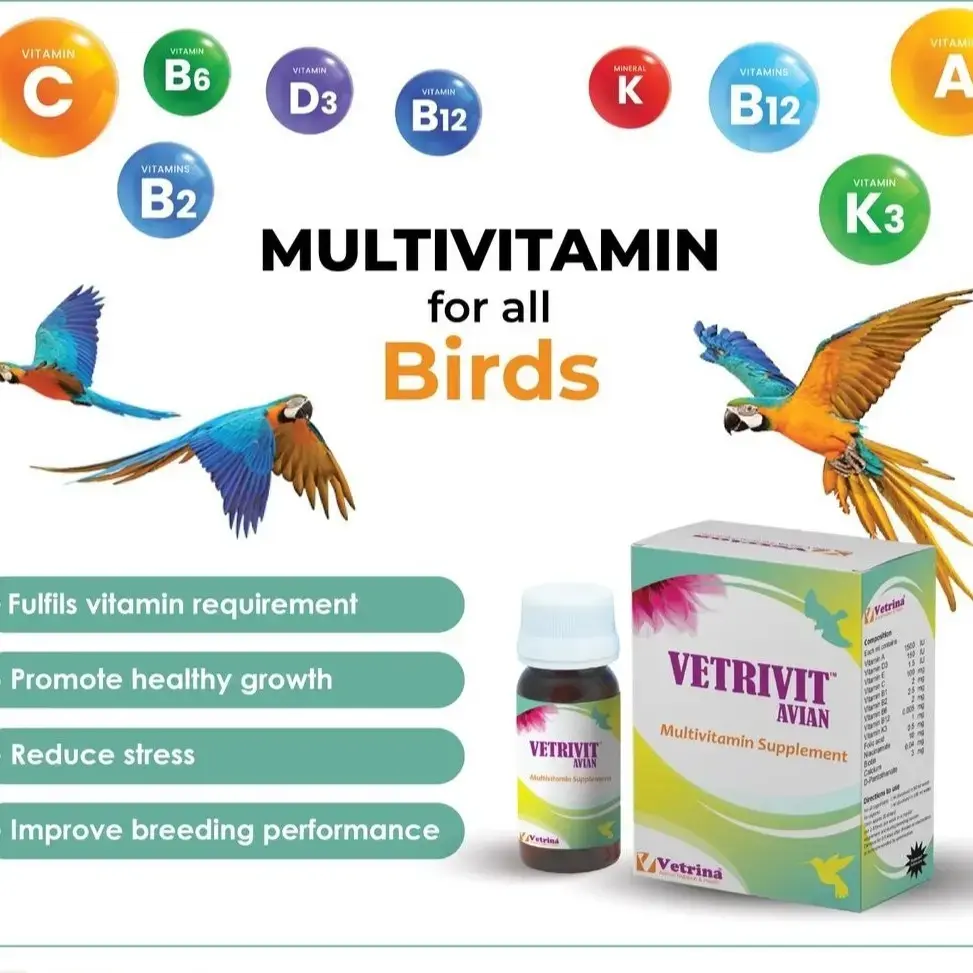
Avian Multivitamin
Complete daily vitamin supplement....

Calcium Block
Essential calcium supplement....
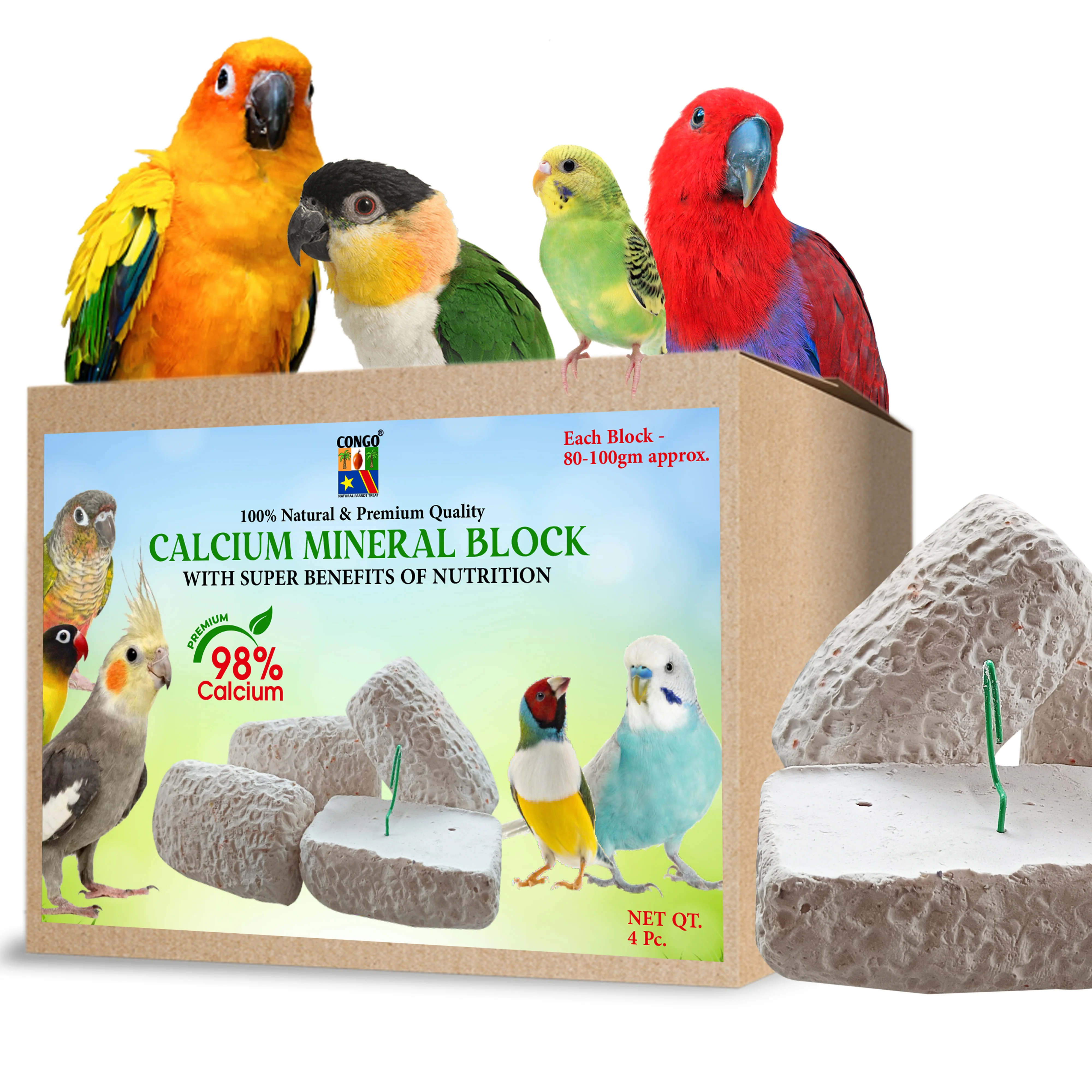
Calcium Block
Essential calcium and mineral block enriched with iodine and trace minerals. Pro...
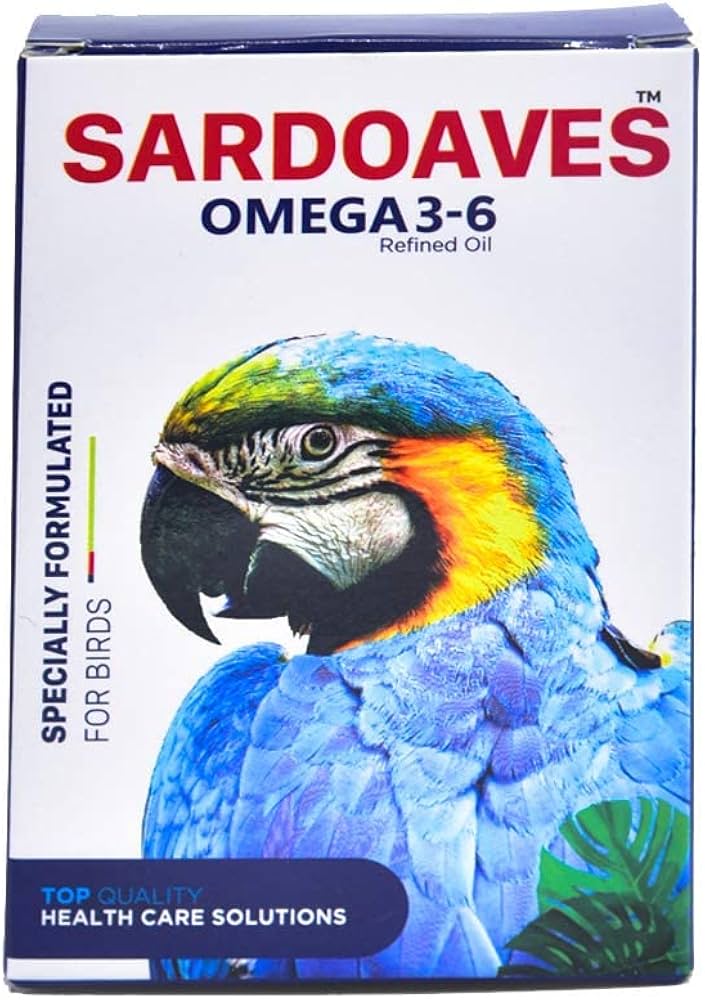
Omega Fatty Acid Supplement
Cold-pressed flaxseed and hemp oil blend providing essential omega-3 and omega-6...
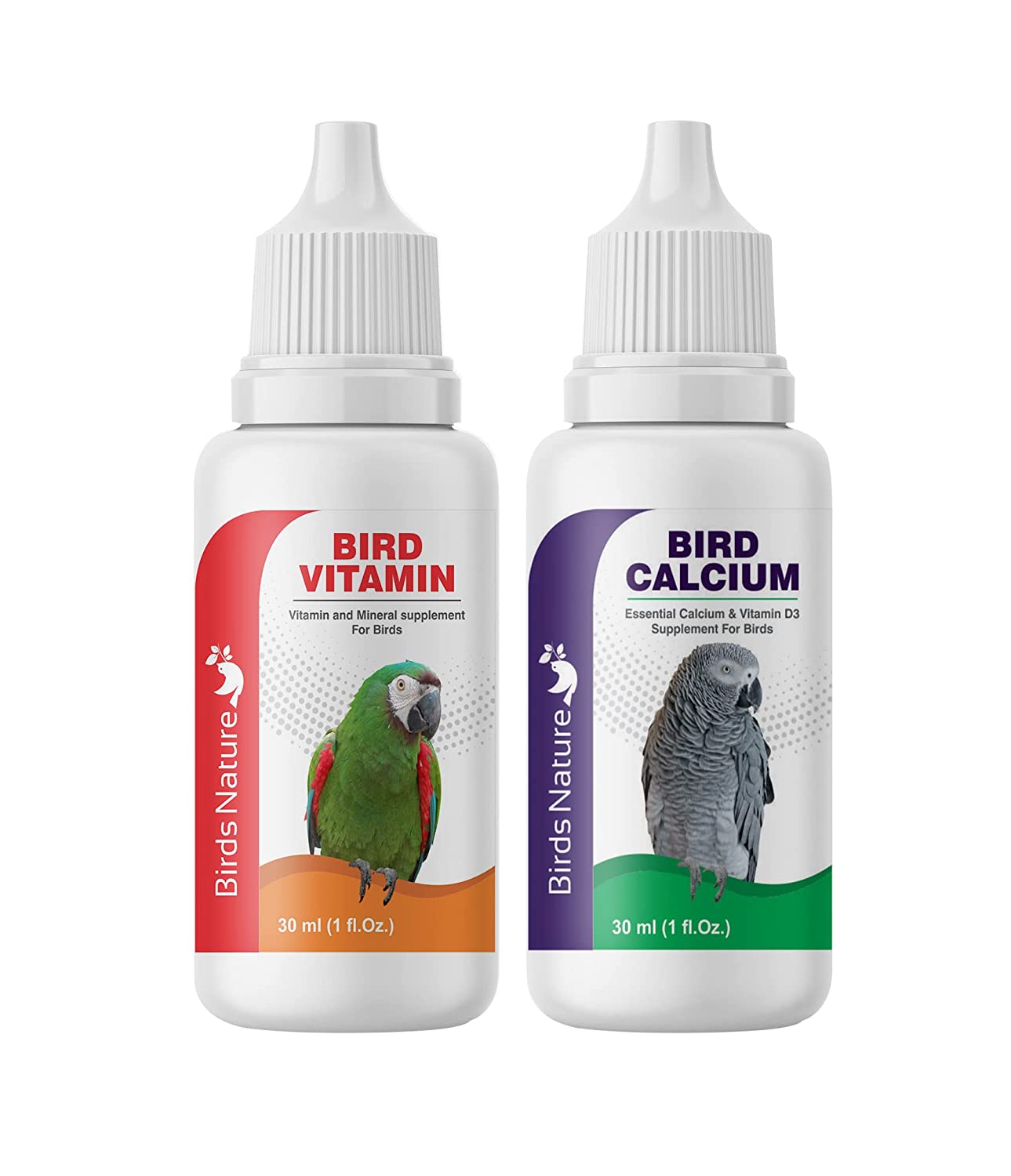
Vitamin D3 Liquid Drops
Concentrated Vitamin D3 drops formulated for indoor parrots who lack natural sun...
Calcium and vitamin D3
This is the one supplement pairing with a clear, well-documented clinical case behind it. African Greys are notably prone to hypocalcaemia, which can present as tremors, seizures or sudden collapse in an apparently healthy adult. Laying hens of any species deplete calcium rapidly and are at risk of egg binding and metabolic bone disease. Growing chicks need calcium for skeletal development.
Calcium is useless without vitamin D3, which drives its absorption. Birds synthesise D3 in the skin under ultraviolet-B light, and ordinary indoor lighting and window glass both block UVB entirely. A bird kept permanently indoors under normal lighting therefore relies on dietary D3. Cuttlebone and mineral blocks provide calcium in a form birds self-regulate reasonably well; liquid D3 should be dosed to a vet's instruction, because oversupply causes soft-tissue calcification.
Where supplements are usually unnecessary
- A bird on 60-70 per cent good formulated pellet with varied fresh vegetables rarely needs a general multivitamin.
- Vitamin A supplements are only indicated where deficiency is present - typically a bird converting off a long-term seed diet. Chronic oversupply is itself damaging.
- Eclectus parrots are the clearest case against routine supplementation; excess synthetic vitamins in this species are associated with toe-tapping and wing-flipping.
- Adding supplements to drinking water encourages bacterial growth and makes dosing unmeasurable. Add to soft food instead where a supplement is genuinely indicated.
Supplements with a reasonable case
- Omega-3 fatty acids - relevant to feather quality and cardiovascular health, particularly in Amazons and other species prone to atherosclerosis on high-fat rations.
- Probiotics - useful after a course of antibiotics, during transport or rehoming stress, and around weaning.
- Amino acid and protein support during a heavy moult, when feather production creates real demand.
- Targeted correction of a deficiency identified by an avian vet through examination and bloodwork.
How to use them safely
Read the label for the actual concentration rather than the marketing claim, dose by body weight, and record what you give and when. Tell your avian vet about every supplement in use before bloodwork, because several will alter results. If a bird is unwell, a supplement is not a substitute for a diagnosis - lethargy, fluffed posture, tail bobbing, changed droppings or weight loss are veterinary matters, not nutritional experiments.
Supplements in this range
Avian Multivitamin · Calcium Block · Calcium Block · Omega Fatty Acid Supplement · Vitamin D3 Liquid Drops
Related reading
Parrot nutrition guide · Cage and aviary setup · Safe plants and toxic foods · Recognising illness in parrots · Bathing and grooming · Compare parrot species
Supplements: frequently asked questions
Usually not, if it eats a good formulated pellet plus varied fresh vegetables. Supplements are for identified needs - a laying hen, a chick, a Grey with low calcium, a bird converting off seed - rather than routine insurance.
African Greys are unusually prone to hypocalcaemia, which can cause tremors, seizures and collapse. Adequate dietary calcium plus vitamin D3, which is required for absorption, is the standard preventive approach. Ask your avian vet about baseline ionised calcium testing.
It is a poor method. Additives encourage bacterial growth in the bowl, some birds then avoid drinking, and you cannot know how much the bird actually consumed. Add to soft food instead.
Yes. Vitamins A and D3 are fat-soluble and accumulate. Chronic oversupply of vitamin D3 causes soft-tissue calcification and kidney damage; chronic vitamin A excess causes its own problems. This is why blanket supplementation on top of a fortified pellet is discouraged.
Window glass and standard indoor lighting block the UVB birds need to make vitamin D3, so an indoor bird depends on dietary D3 or on a proper avian UVB lamp used at the manufacturer's stated distance and replaced on schedule. Discuss which route suits your bird with an avian vet.
They have a reasonable case after antibiotic treatment and during stressful periods such as rehoming, transport or weaning. As a permanent daily addition to a healthy bird on a good diet the evidence is much weaker.