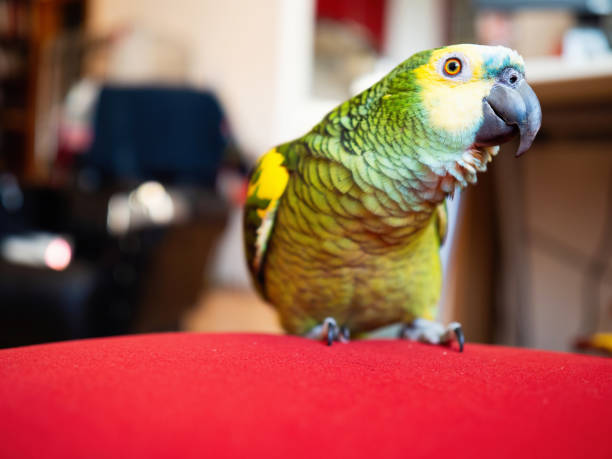
 Limited Availability
Yellow-naped Amazon
The Yellow-naped Amazon is one of the most sought-after Amazon parrots, known for its exceptional ta...
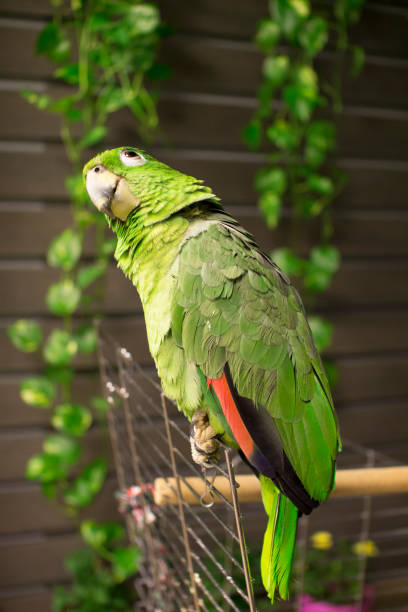 Available Now
Amazon Parrot
Our collection features several stunning Amazon species....
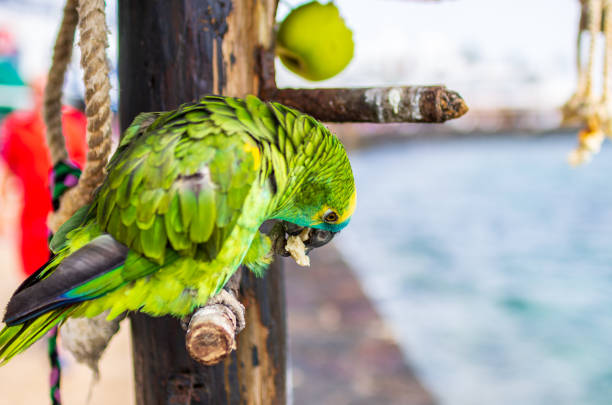 Limited Availability
Blue-Fronted Amazon
One of the most popular Amazon parrots for its speech abilities....
 Limited Availability
Yellow-Naped Amazon
Known for its exceptional talking ability....
The species we group here
- Yellow-naped Amazon (Amazona auropalliata) - 35-38 cm, 480-680 g, Pacific slope from southern Mexico to north-west Costa Rica. Widely regarded as the finest talker and singer in the genus. IUCN Critically Endangered; transferred to CITES Appendix I at CoP18 in 2019.
- Blue-fronted Amazon (Amazona aestiva) - about 37 cm, 400-500 g, from Brazil, Bolivia, Paraguay and northern Argentina. Excellent talker, strong singer, IUCN Near Threatened, CITES Appendix II.
- Lilacine Amazon (Amazona lilacina) - about 34 cm, roughly 370 g, endemic to western Ecuador. Notably quieter and gentler than the rest of the genus, which is why experienced keepers seek it out. IUCN Endangered, CITES Appendix II.
Temperament and the hormonal years
Amazons are confident, extroverted and physically bold. They generally handle household change better than Greys and are less prone to phobic behaviour. The trade-off arrives at sexual maturity, typically four to six years old, when many males in particular become seasonally aggressive: pinned eyes, fanned tail, raised nape feathers and a genuine willingness to bite hard.
This is normal biology, not a defect, and it is manageable. Practical measures are a strict twelve-hour dark sleep period, avoiding stroking anywhere other than the head and neck, removing nest-like cavities including boxes and dark cupboard spaces, and keeping interactions on a step-up-and-station basis during the season. Owners who are not warned about this stage are the ones who rehome their bird at year five.
Housing, noise and diet
Minimum indoor enclosure is 91 x 61 x 122 cm (36 x 24 x 48 in), bar spacing 1.9-2.5 cm. Amazons are strong chewers, so powder-coated wrought iron or stainless steel only.
On volume: Amazons scream. Dawn and dusk contact calls are loud, sustained and carry through walls, and Yellow-naped Amazons in particular have regional vocal dialects and a habit of singing at length. They are not apartment birds.
Diet is where Amazons go wrong most often. The genus is strongly predisposed to obesity and to fatty liver disease on a seed-based ration, and to hypovitaminosis A on the same. Build the diet on formulated pellet at roughly 60-70 per cent of intake, add generous dark leafy greens, squash, carrot and pepper for vitamin A precursors, keep fruit modest because of sugar load, and reserve nuts and sunflower seed strictly as training rewards.
Health issues specific to Amazons
- Obesity and hepatic lipidosis - the single most common preventable problem; weigh weekly on a gram scale and track the trend.
- Hypovitaminosis A - presents as recurrent sinusitis, blunted choanal papillae and poor feather condition.
- Amazon foot necrosis - an uncommon but well-described condition of constricting, ulcerative lesions on the feet.
- Aspergillosis - fungal respiratory infection linked to poor ventilation and damp bedding.
- Atherosclerosis - increasingly recognised in older Amazons on high-fat diets.
Legal position
All Amazona species are CITES-listed. Most sit on Appendix II, but the Yellow-naped Amazon was uplisted to Appendix I in 2019, which places it in EU Annex A and therefore requires a bird-specific Article 10 certificate for any commercial transaction inside the European Union, plus matched ringing or microchipping. Cross-border movement of any Amazon requires CITES export and import permits arranged before the bird travels. Confirm the current position with your national CITES management authority, since listings change at each Conference of the Parties.
Amazons in our current listings
Yellow-naped Amazon · Amazon Parrot · Blue-Fronted Amazon · Yellow-Naped Amazon
Related care guides
Choosing your first parrot · Parrot nutrition and diet conversion · Cage and aviary setup · Parrot lifespan by species · Recognising illness in parrots · Cages sized by species
Amazon parrots: frequently asked questions
The Yellow-naped Amazon is widely considered the best talker and singer of the genus, with the Blue-fronted Amazon close behind. Individual variation is substantial, and a bird that never speaks is still a normal bird.
Commonly 50-60 years in captivity, with Blue-fronted Amazons frequently reaching the upper end. Treat an Amazon as a lifelong dependant and arrange for its care after your death.
Not inherently, but most become seasonally hormonal from about four to six years old, and during that period they can bite hard and without much warning. Twelve hours of darkness, head-only petting and removal of nest-like spaces manage it well.
Realistically no. Amazon contact calls are loud and sustained, they occur at dawn and dusk regardless of your schedule, and they carry through shared walls.
Among the birds we work with, the Lilacine Amazon (Amazona lilacina) has the mildest voice and temperament. It is still a large parrot and still audible - just markedly less than a Yellow-naped.
Roughly 60-70 per cent formulated pellet, a generous daily portion of vegetables high in vitamin A precursors such as kale, carrot, squash and red pepper, modest fruit, and nuts or sunflower only as measured training treats. All-seed diets cause obesity, fatty liver disease and vitamin A deficiency.