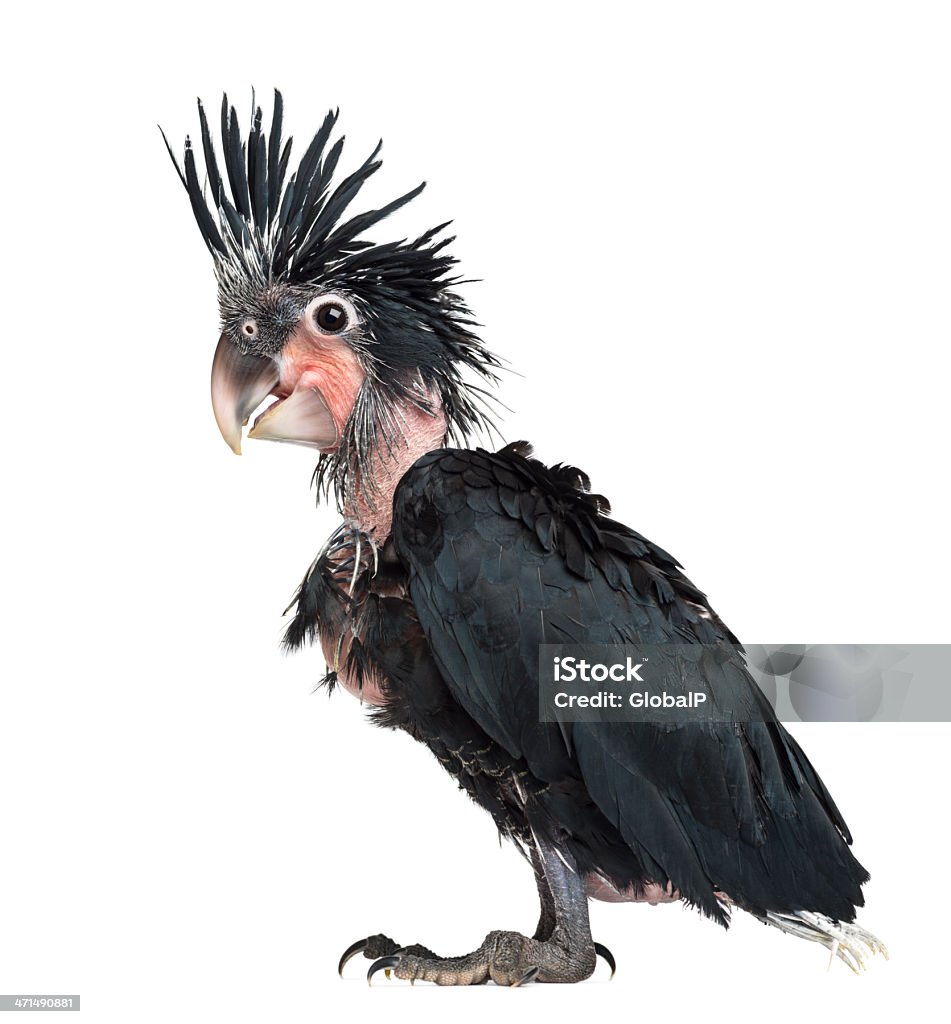
 Available Now
Palm Cockatoo
One of the rarest and most magnificent cockatoos....
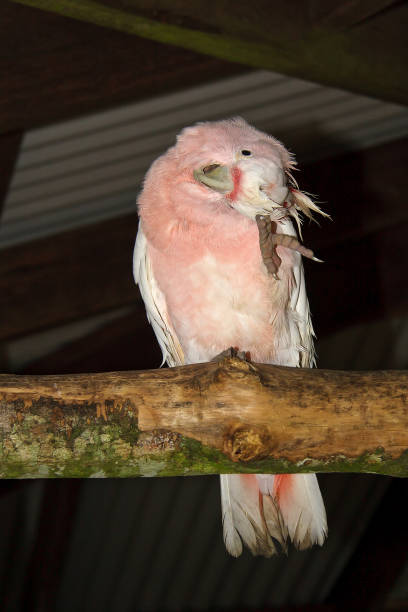 Limited Availability
Major Mitchell Cockatoo
Arguably the most beautiful of all cockatoos....
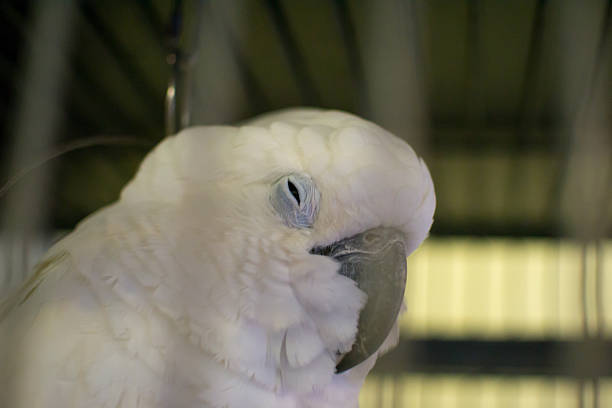 Available Now
Goffin Cockatoo
A smaller cockatoo known for its playful personality....
The two species we work with
- Major Mitchell's Cockatoo, also called the Pink Cockatoo (Lophochroa leadbeateri, formerly Cacatua leadbeateri) - 35-40 cm, 300-450 g, from arid and semi-arid inland Australia. Spectacular red-and-yellow banded crest. CITES Appendix I. Listed as Endangered under Australia's EPBC Act in 2023. Australia has prohibited the export of native wildlife for decades, so every bird outside Australia is a captive-bred descendant.
- Goffin's Cockatoo, also called the Tanimbar Corella (Cacatua goffiniana) - about 31 cm, 250-350 g, endemic to the Tanimbar Islands of Indonesia. CITES Appendix I, IUCN Near Threatened. Famous in cognitive science: Goffin's cockatoos in Vienna spontaneously manufactured and used tools to retrieve out-of-reach food, one of the clearest demonstrations of innovative tool-making outside primates and corvids.
Noise, honestly
Cockatoo screaming is the reason most cockatoos change homes. Both species produce a piercing, sustained screech, and Goffin's in particular will scream persistently when they want attention - a behaviour that is trivially easy to reinforce accidentally and very hard to extinguish afterwards. A cockatoo is unsuitable for an apartment, a semi-detached house, or any home where daytime noise is constrained. Please do not enquire about one if noise is a constraint you cannot absorb.
Space, destruction and escape
Minimum indoor enclosure for either species is 91 x 61 x 122 cm (36 x 24 x 48 in), with a full-height aviary strongly preferred for Major Mitchell's, which is a bird of open country and covers real distance in flight. Bar spacing 1.9-2.5 cm, stainless steel or heavy powder-coated iron.
Goffin's Cockatoos are notorious escape artists. The same problem-solving that produced their tool-use results is applied daily to latches, and a simple slide bolt will not hold one. Use padlocks or captive-pin bolts. Both species chew constantly and require a steady supply of destructible untreated softwood, palm leaf, cardboard and paper - this is a consumable running cost, not a one-off purchase.
Powder down and human health
Cockatoos produce more powder down than almost any other parrot. This fine keratin dust coats surfaces, circulates in the air and is a documented cause of hypersensitivity pneumonitis - bird fancier's lung - in susceptible people. If anyone in the household has asthma or another chronic respiratory condition, a cockatoo is a poor choice, and good air filtration plus frequent bathing of the bird are necessary rather than optional.
Health and behaviour
- Feather-destructive behaviour and self-mutilation - cockatoos are the species most likely to progress from plucking to chest mutilation requiring veterinary intervention.
- Psittacine beak and feather disease (PBFD) - cockatoos are a classic host; testing new birds and quarantining for 30-45 days is essential.
- Obesity and fatty liver disease on seed-heavy diets. Build the ration on formulated pellet plus vegetables; Major Mitchell's in particular do well with sprouted seed and native-style dry seed in measured amounts.
- Chronic reproductive behaviour in hens, including chronic egg laying, when photoperiod and diet are not controlled.
Legal status
Both Lophochroa leadbeateri and Cacatua goffiniana are on CITES Appendix I, which places them in Annex A of EU Regulation (EC) No 338/97. A commercial transaction inside the EU therefore requires a bird-specific Article 10 certificate and a closed ring or microchip matching the paperwork; any movement across an international border requires CITES export and import permits obtained in advance. Verify requirements with your national CITES management authority before you commit to a bird.
Cockatoos in our current listings
Palm Cockatoo · Major Mitchell Cockatoo · Goffin Cockatoo
Related care guides
Choosing your first parrot · Parrot nutrition and diet conversion · Cage and aviary setup · Parrot lifespan by species · Recognising illness in parrots · Cages sized by species
Cockatoo parrots: frequently asked questions
Major Mitchell's Cockatoos commonly reach 40-60 years and sometimes more; Goffin's Cockatoos typically live 25-40 years. Both will realistically outlive a middle-aged owner.
Yes. A cockatoo screech is piercing, sustained and audible through walls and closed windows. Goffin's will scream for attention and the behaviour is easily reinforced by accident. Do not take one on if noise is a constraint.
Most often chronic under-stimulation, insufficient sleep, loss of a bonded companion, or a hormonal state driven by inappropriate petting and long day length. Medical causes must be excluded first, but husbandry is the usual driver and the usual solution.
Not without preparation. Cockatoos are flock animals with an unusually strong pair bond. They need substantial foraging enrichment loaded before you leave, a predictable routine, and ideally a companion bird or a household with staggered occupancy.
Both species mimic to a limited degree - a handful of words, some household sounds - but neither approaches an African Grey or a Yellow-naped Amazon. Choose a cockatoo for its personality, never for speech.
Generally no. Cockatoos are among the heaviest powder-down producers and are associated with bird fancier's lung in sensitive people. Consider an Eclectus or a Caique, which produce far less dust.